
Subfamily MYRMICINAE Author: Joe A. MacGown and Nicole Rasoamanana |
||
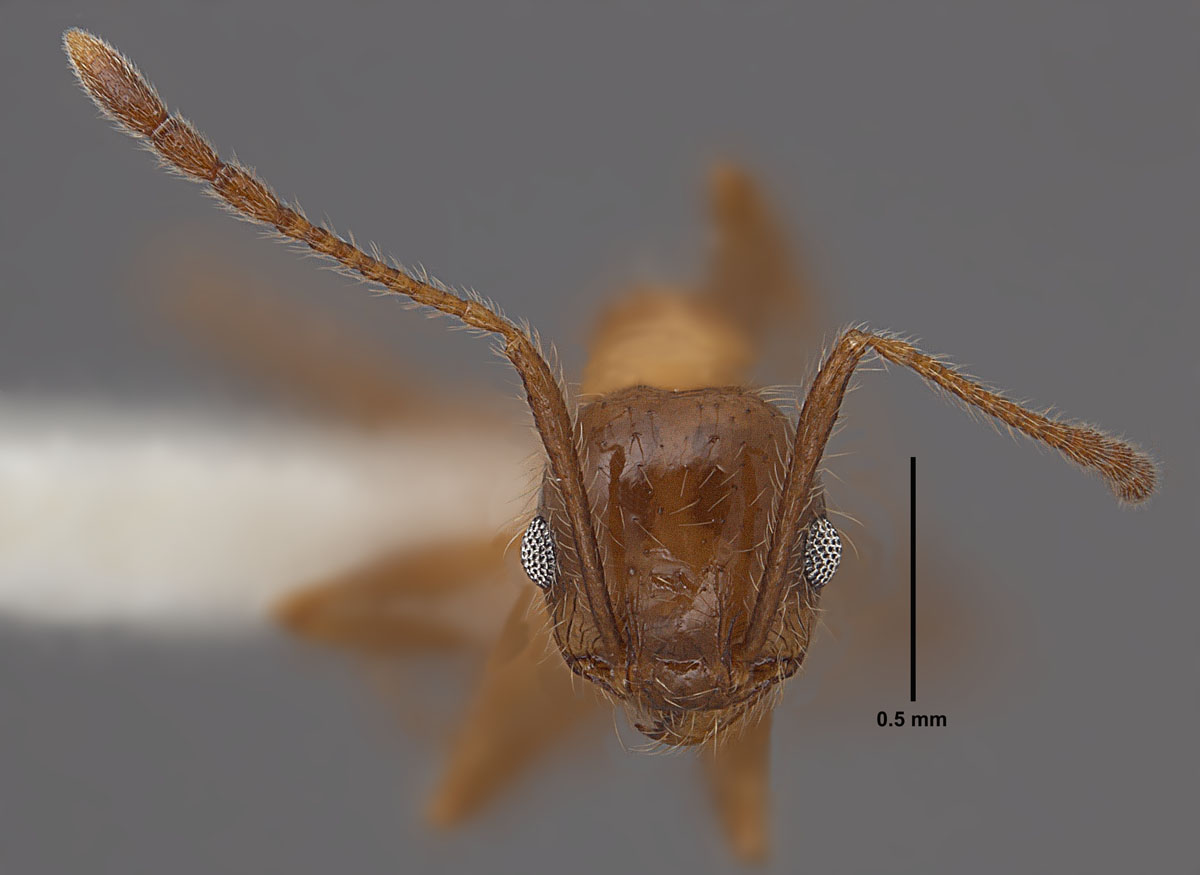 Pheidole dentata, full face view of minor worker (MS, Chickasaw Co.) (photo by Joe A. MacGown) |
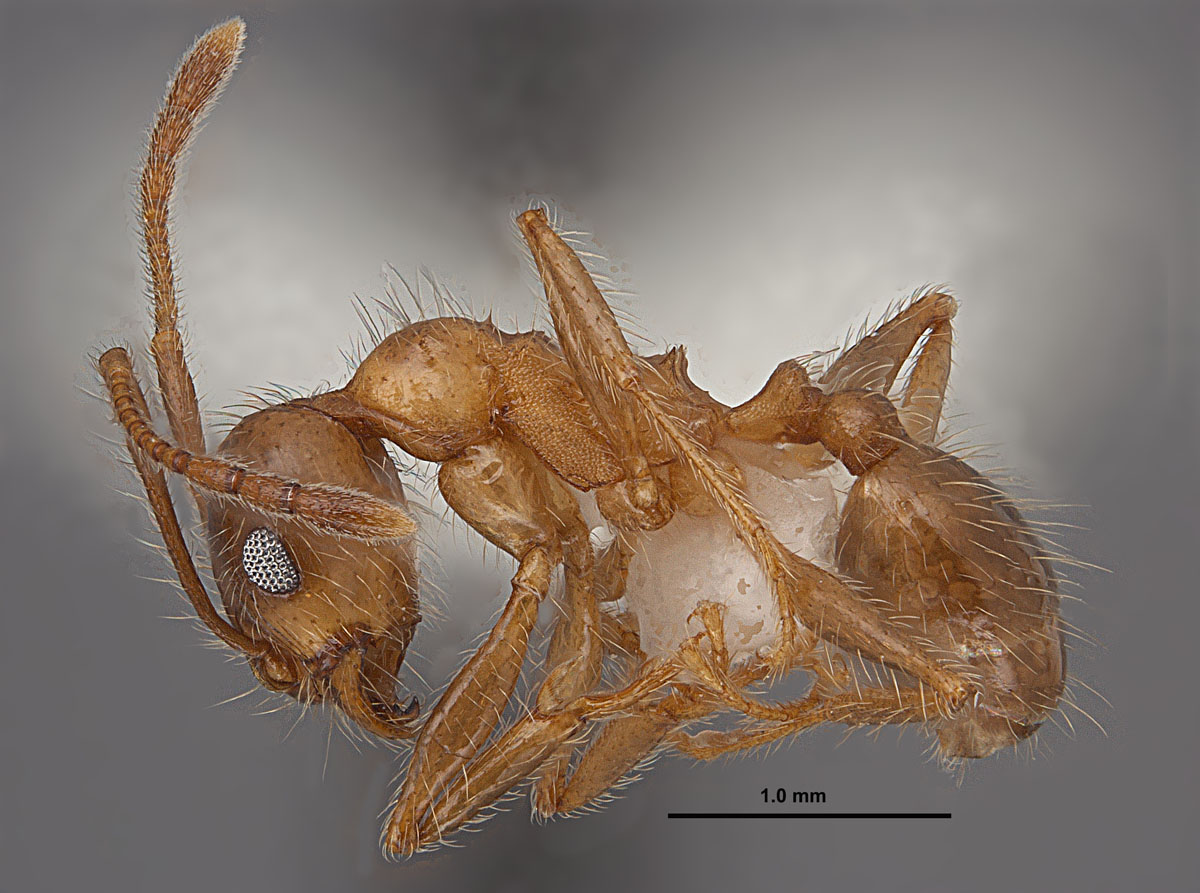 Pheidole dentata, lateral view of minor worker ( MS, Chickasaw Co.) (photo by Joe A. MacGown) |
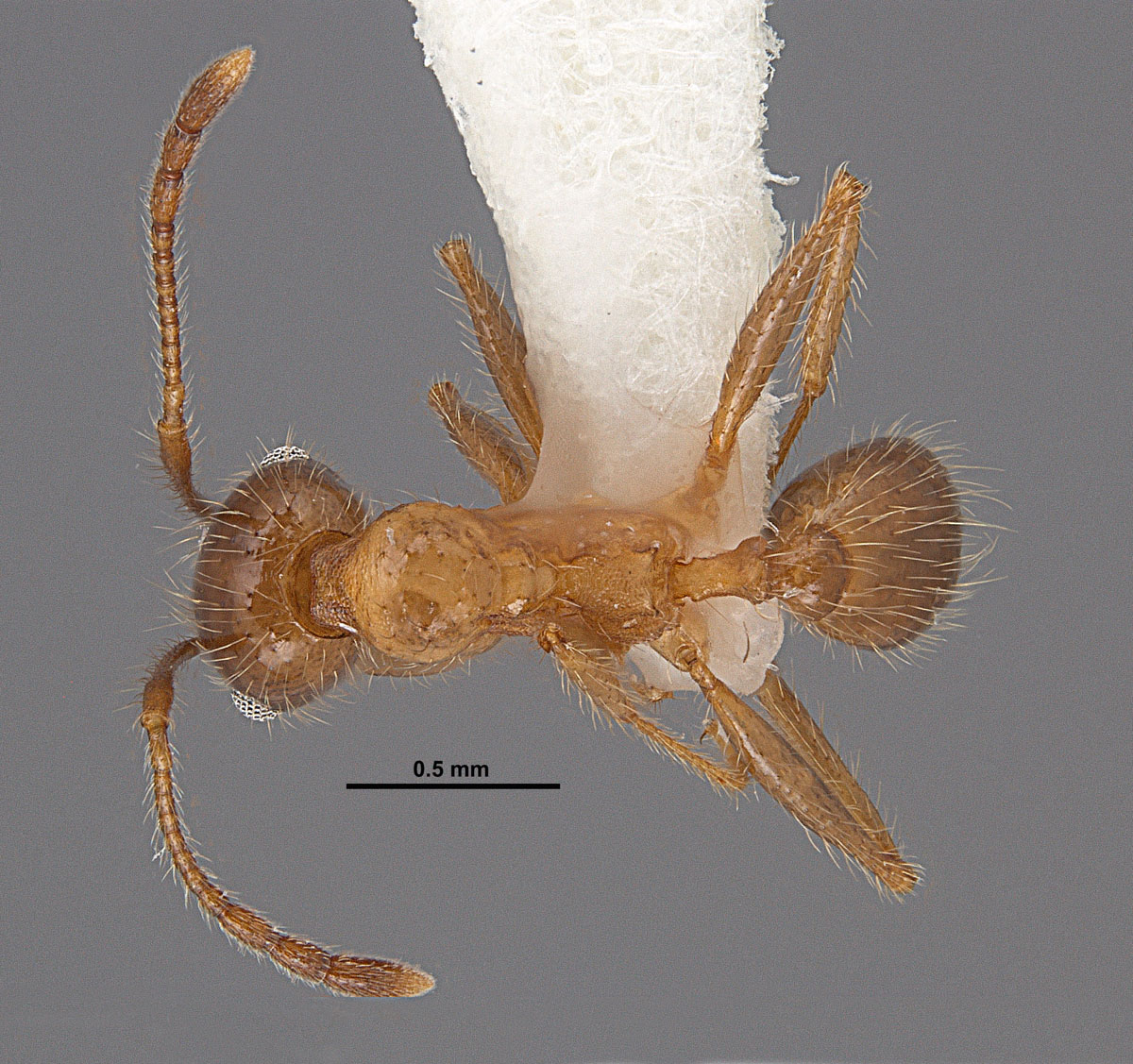 Pheidole dentata, dorsal view of minor worker (MS, Chickasaw Co.) (photo by Joe A. MacGown) |
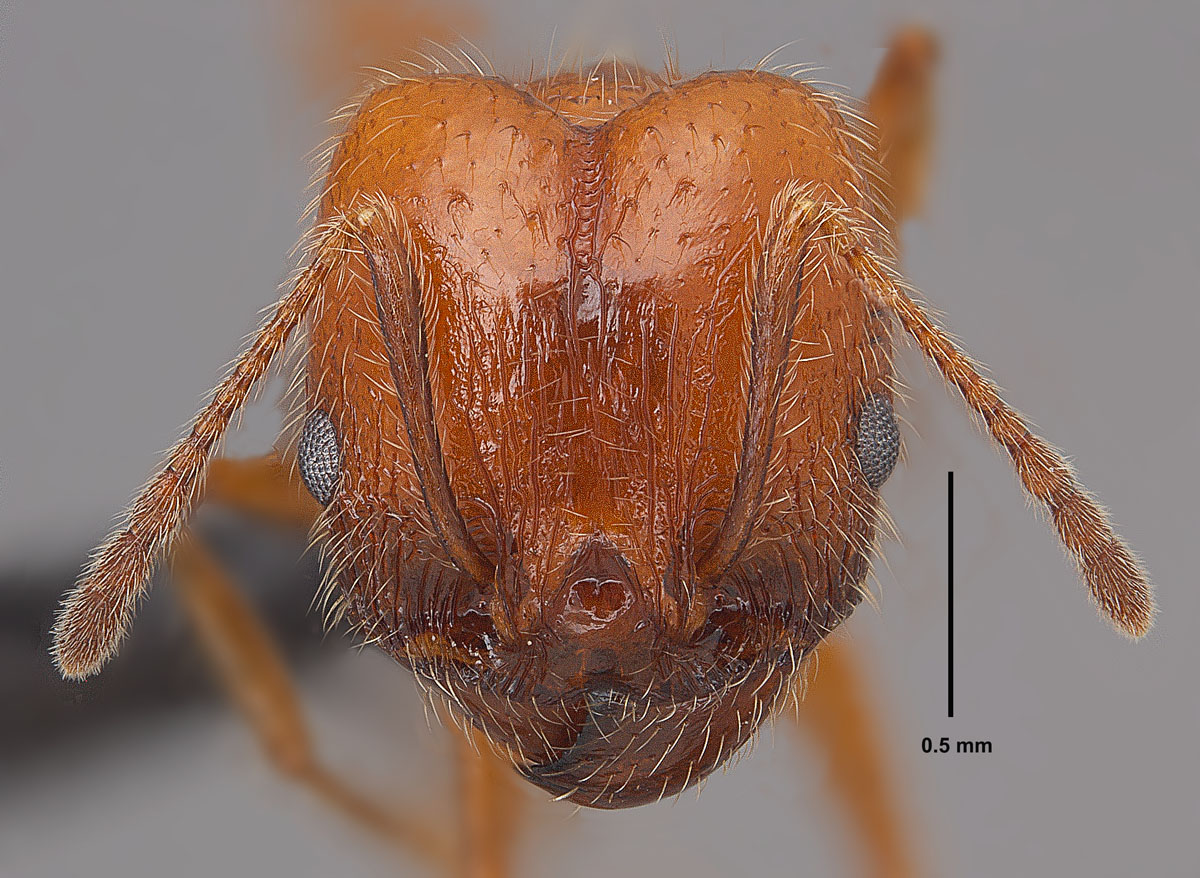 Pheidole dentata, full face view of major worker (ARK, Franklin Co.) (photo by Joe A. MacGown) |
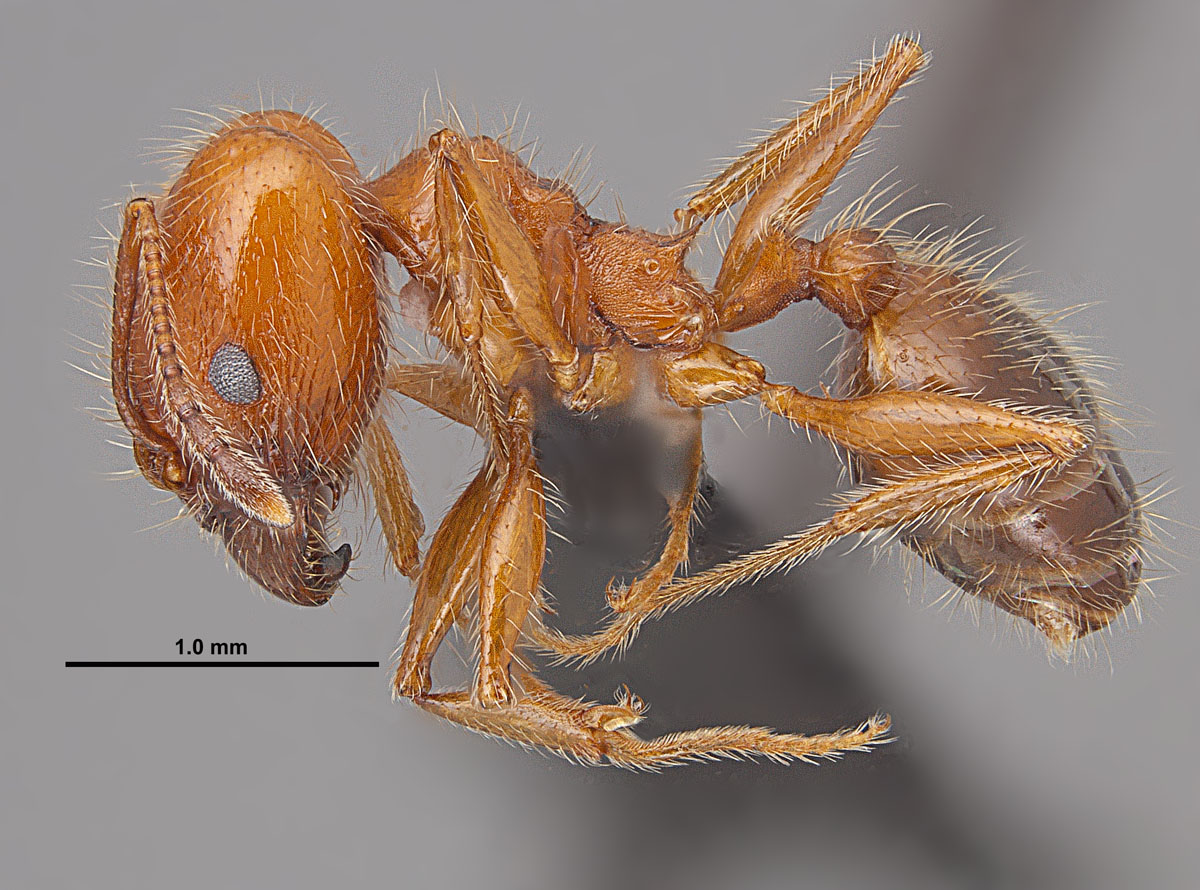 Pheidole dentata, lateral view of major worker (ARK, Franklin Co.) (photo by Joe A. MacGown) |
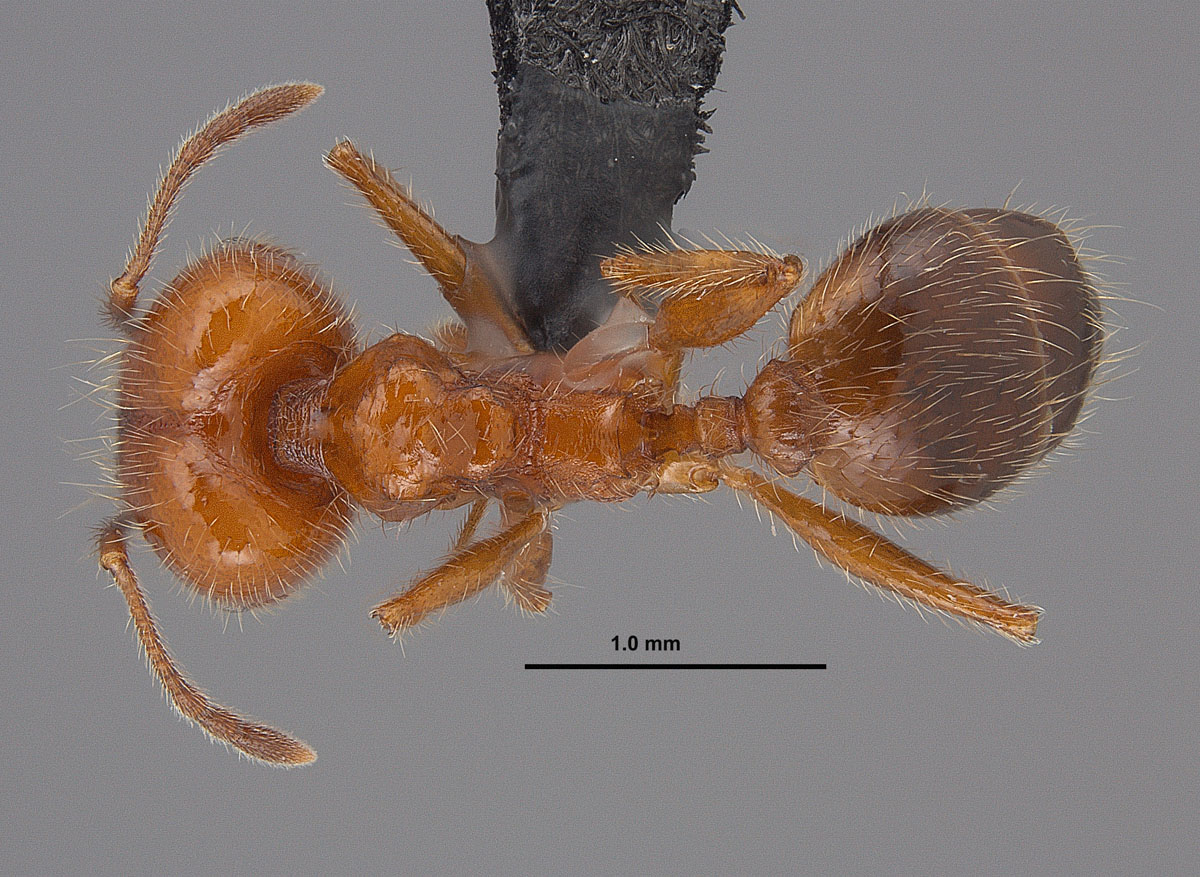 Pheidole dentata,dorsal view of major worker(ARK, Franklin Co. ) (photo by Joe A. MacGown) |
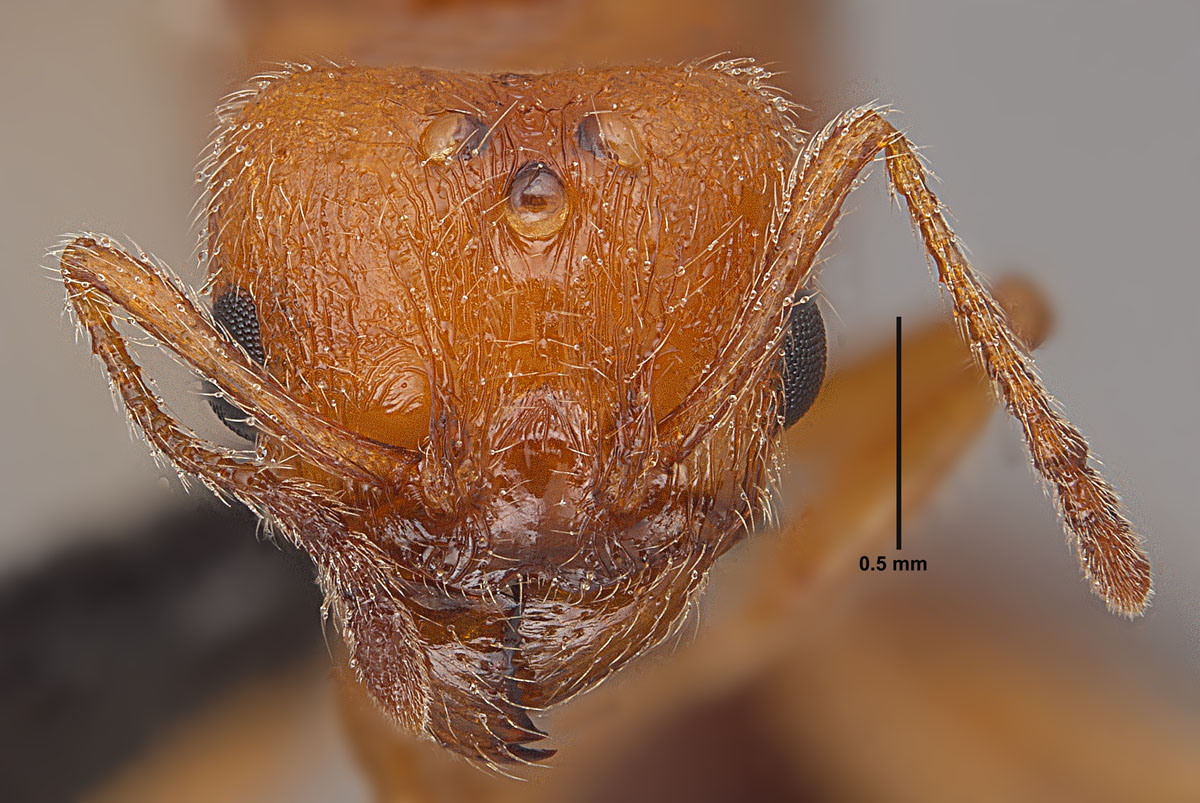 Pheidole dentata, full face view of alate queen (MS, Winston Co.) (photo by Joe A. MacGown) |
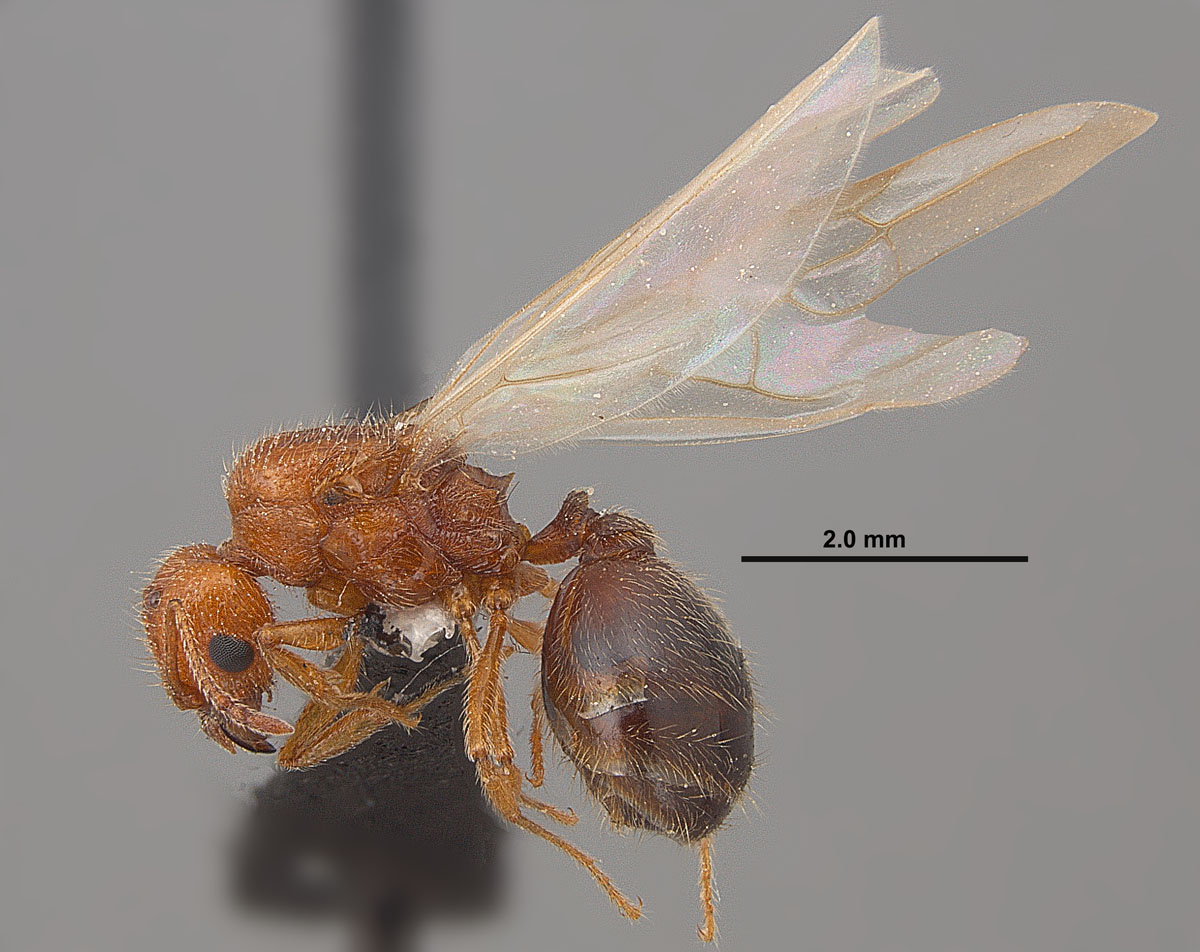 Pheidole dentata, lateral view of alate queen(MS, Winston Co.) (photo by Joe A. MacGown) |
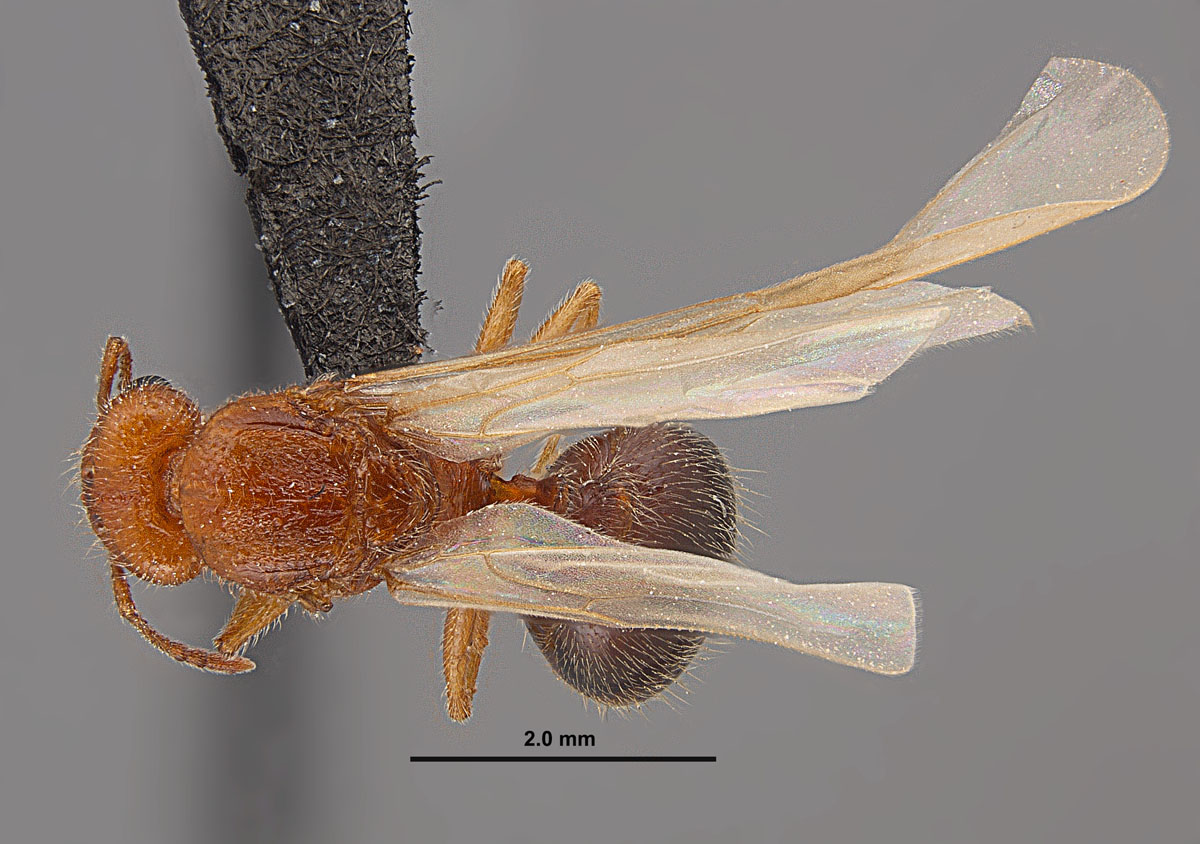 Pheidole dentata, dorsalview of alate queen (MS, Winston Co.) (photo by Joe A. MacGown) |
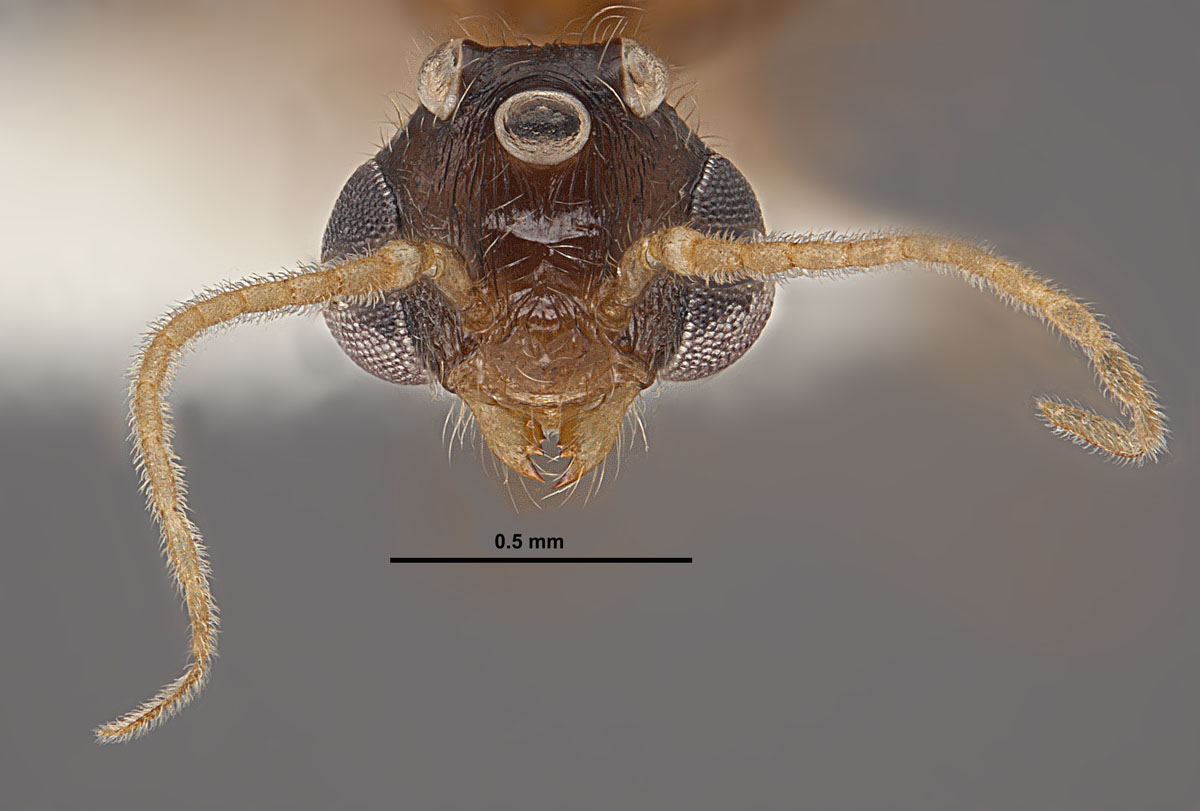 Pheidole dentata, full face view of a male (GA, Chatam Co.) (photo by Joe A. MacGown) |
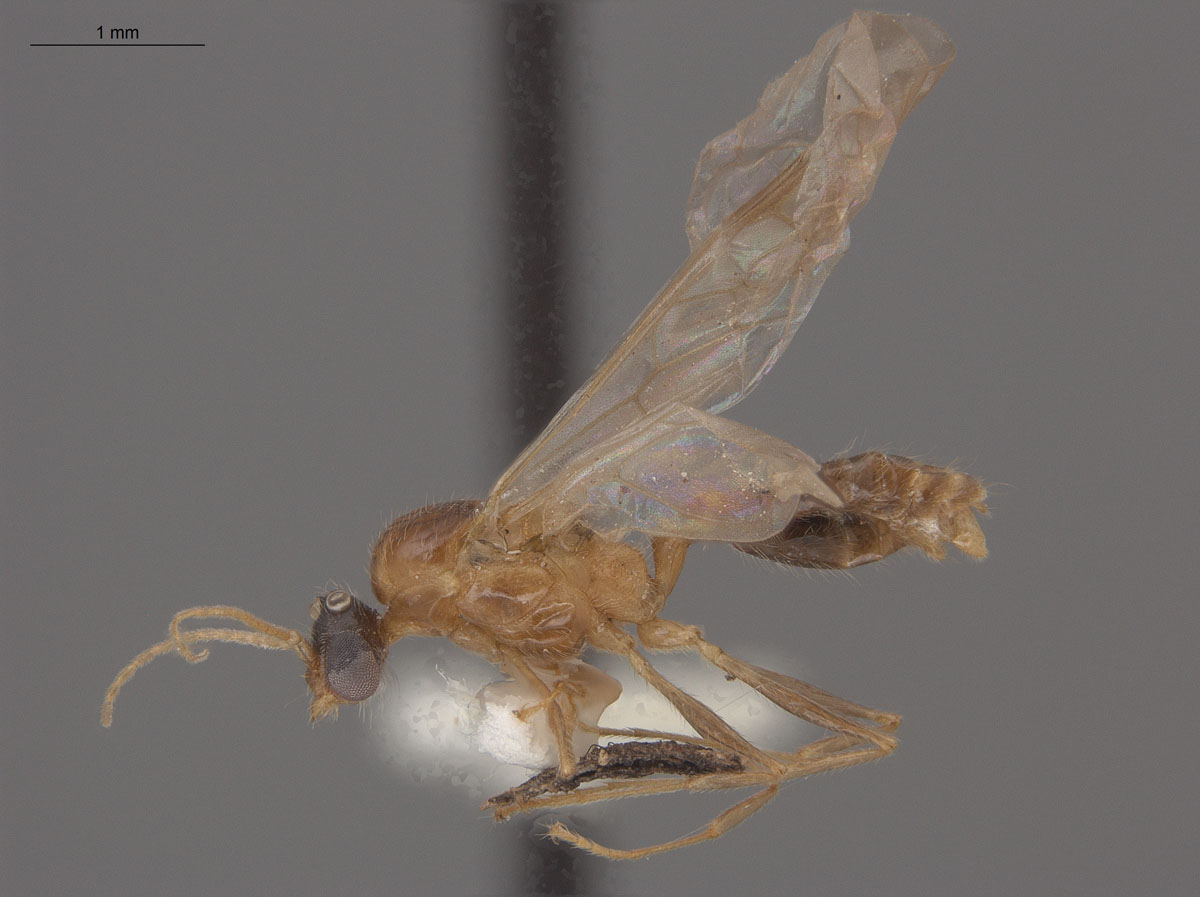 Pheidole dentata, lateral view of a male (GA, Chatam Co.) (photo by Joe A. MacGown) |
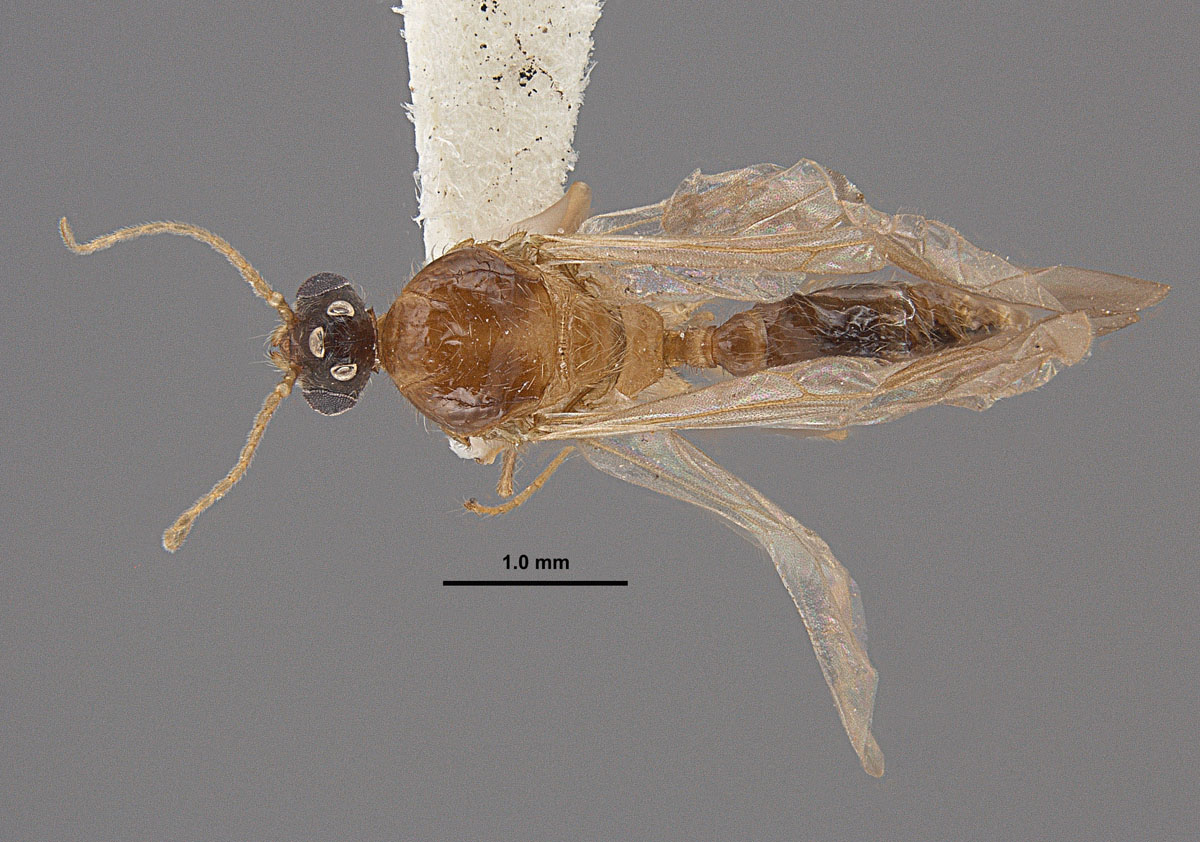 Pheidole dentata, dorsalview of a male (GA, Chatam Co.) (photo by Joe A. MacGown) |
Diagnosis. Minor worker. Small (TL ≈ 2.3–2.9 mm); body reddish brown to dark reddish brown, head usually slightly darker than mesosoma; antennae and legs lighter, yellowish brown to orangish brown; gaster often darker posteriorly; head, mesosoma, and waist punctate to weakly foveolate, sculpture stronger on lateral mesosoma and propodeum; median dorsum of head and gaster mostly smooth and shiny; erect to suberect setae abundant over body; appressed to decumbent pubescence sparse, especially on head and mesosoma. Head longer than wide, subrectangular, posterior margin nearly straight to weakly convex; occipital carina weak; mandibles triangular, apical tooth longest, followed by approximately 5–6 smaller teeth or denticles; frontal carinae short, not concealing antennal insertions. 12 antennomeres, with a distinct 3-segmented apical club; scapes surpassing posterior margin of head by more than one-third of their length; eyes moderately large and convex, situated slightly anterior to midlength of head; ocelli absent. Dorsal mesosomal profile strongly interrupted; promesonotum elevated and evenly convex, metanotal groove deep and distinct, propodeum lower than promesonotum; propodeal spines short, triangular, directed posteriorly to slightly upward; legs of moderate length; mid and hind tibiae each with a single simple spur. Waist two-segmented; petiole pedunculate, node low to moderately raised, rounded to weakly conical, ventral surface flat to weakly convex; postpetiole broader than petiole, rounded and weakly globular. Sting reduced. Literature Cited. Smith, M.R. 1965. House-infesting ants of the Eastern United States, their recognition, biology, and economic importance. United States Department of Agriculture, Technical Bulletin No. 1326: i-105. |
||


MEM | Research Taxa | Introduction | Faunal Lists | Identification | How to Use the Keys | Glossary | Collecting Tips | Specimen Preparation MEM Publications | MEM Ant Publications | Ant Videos | Ant News | MEM Ant Blog | References | Acknowledgments | Links
Author-Joe MacGown: jmacgown@entomology.msstate.edu
The ant web site was uploaded on 6 March 2003 and was last updated on 11 September 2024
(specific pages may have different uploaded and updated dates)
Drawings and photographs by Joe MacGown (unless otherwise noted) and copyrighted by the Mississippi Entomological Museum
The development of this web site was supported in part by the National Institute of Food and Agriculture, United States Department of Agriculture, under Project No. MIS-012040 and the USDA-ARS Areawide Management of Imported Fire Ant Project (Richard L. Brown, Principal Investigator).