

Subfamily FORMICINAE Author: Joe A. MacGown and Nicole Rasoamanana |
|||
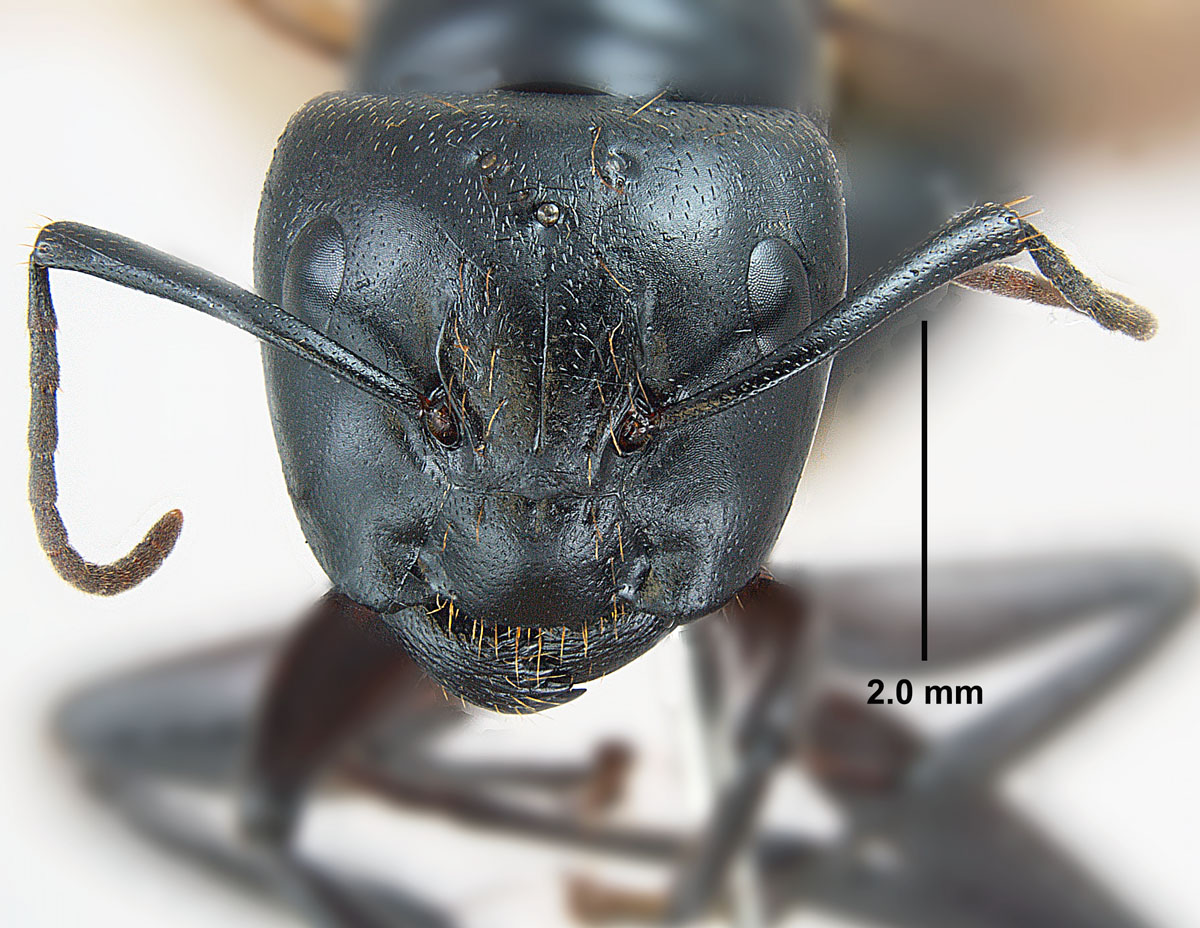
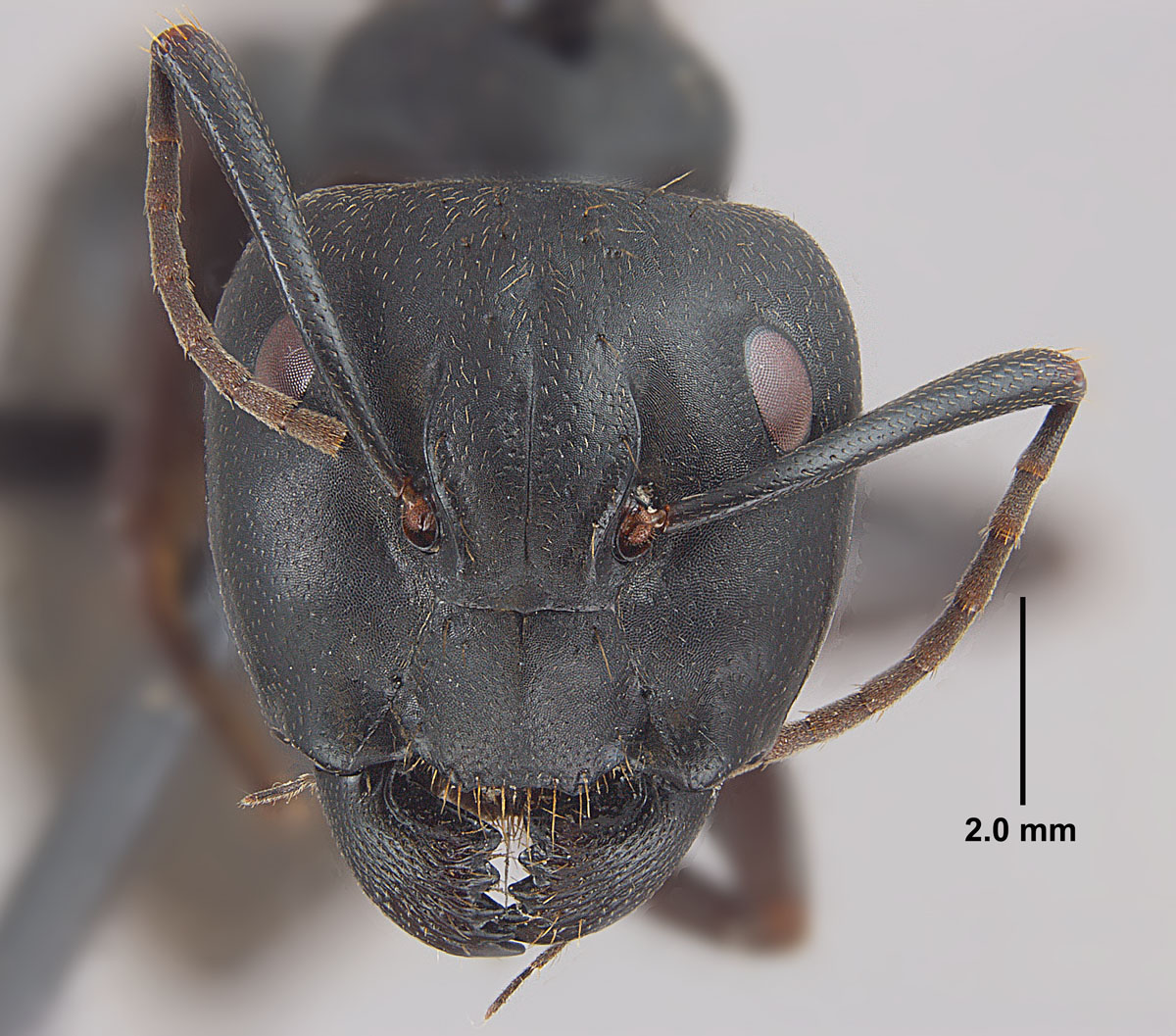 Camponotus pennsylvanicus, full face view of major worker (MS, Covington Co.) (Photo by Joe A. MacGown). |
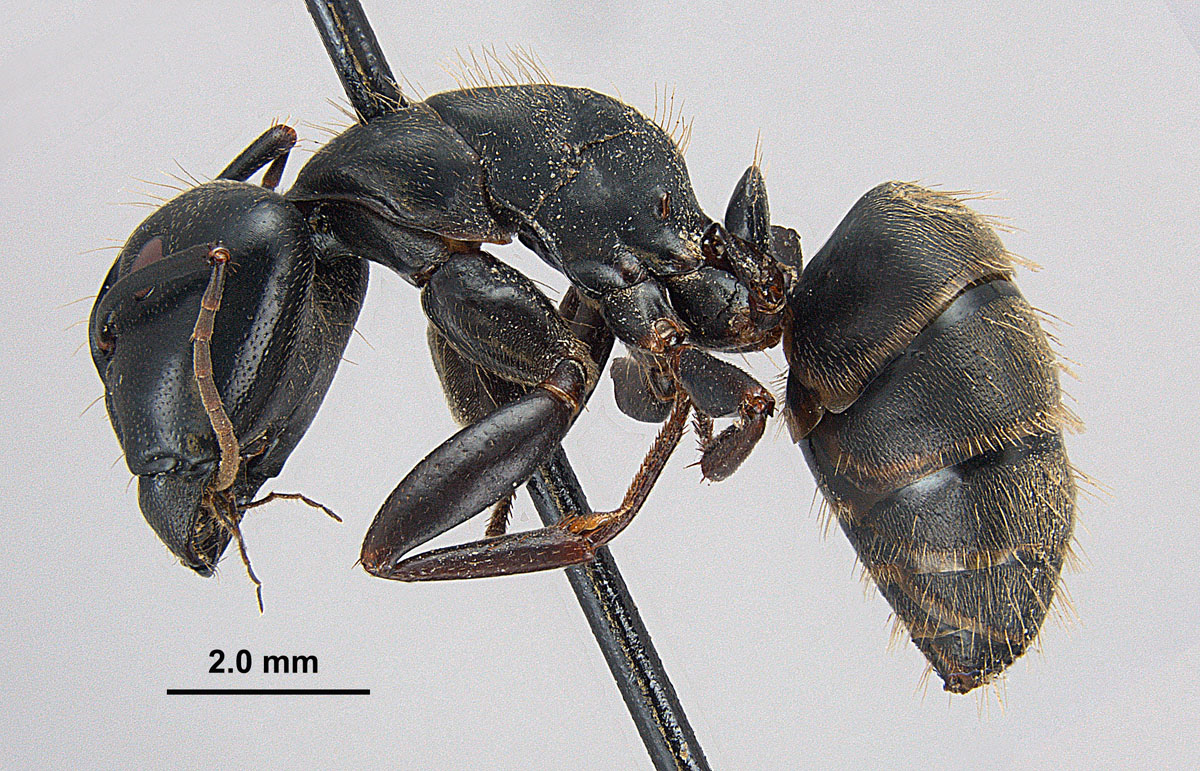 Camponotus pennsylvanicus, lateral view of major worker (MS, Covington Co.) (Photo by Joe A. MacGown) |
|
|
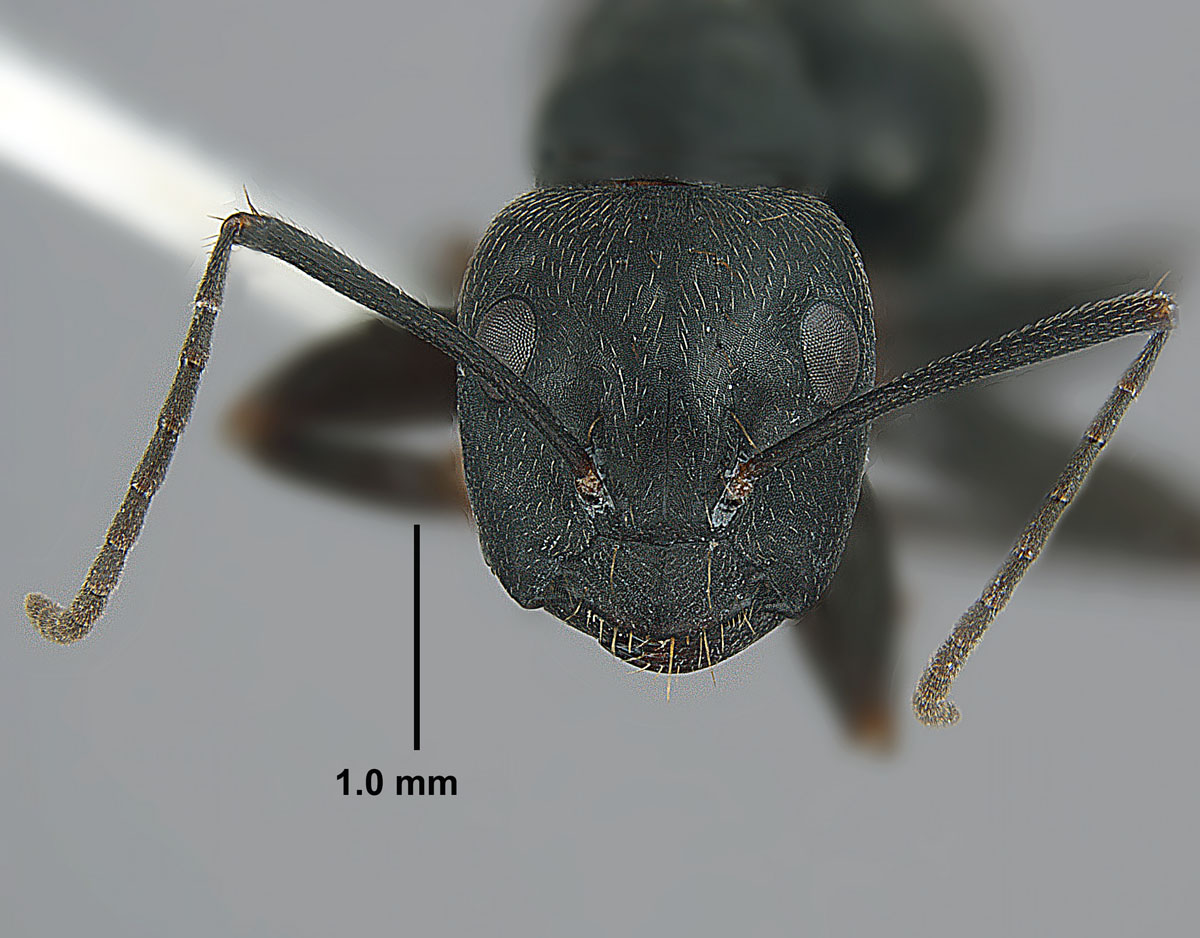 Camponotus pennsylvanicus, full face view of minor worker (MS, DeSoto Co.) (Photo by Joe A. MacGown). |
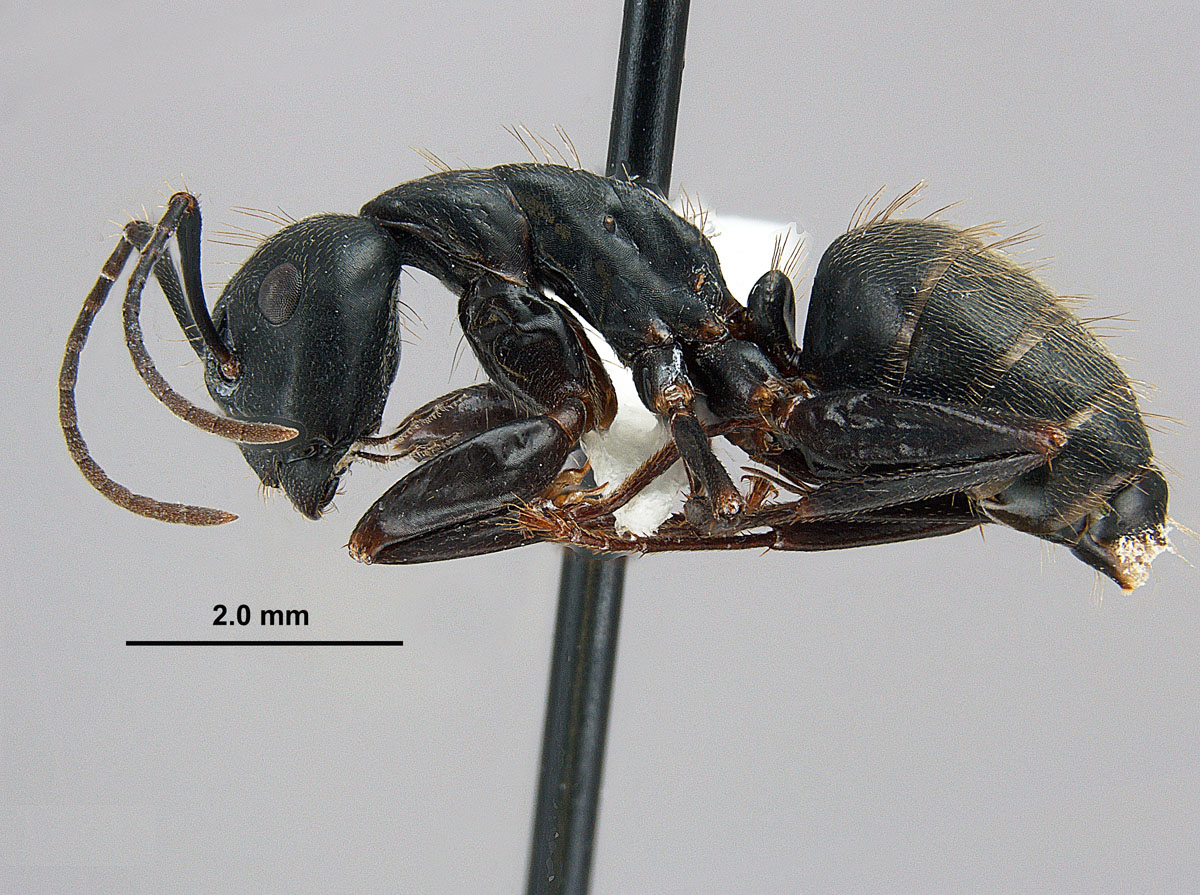 Camponotus pennsylvanicus, lateral view of minor worker (MS, DeSoto Co.) (Photo by Joe A. MacGown). |
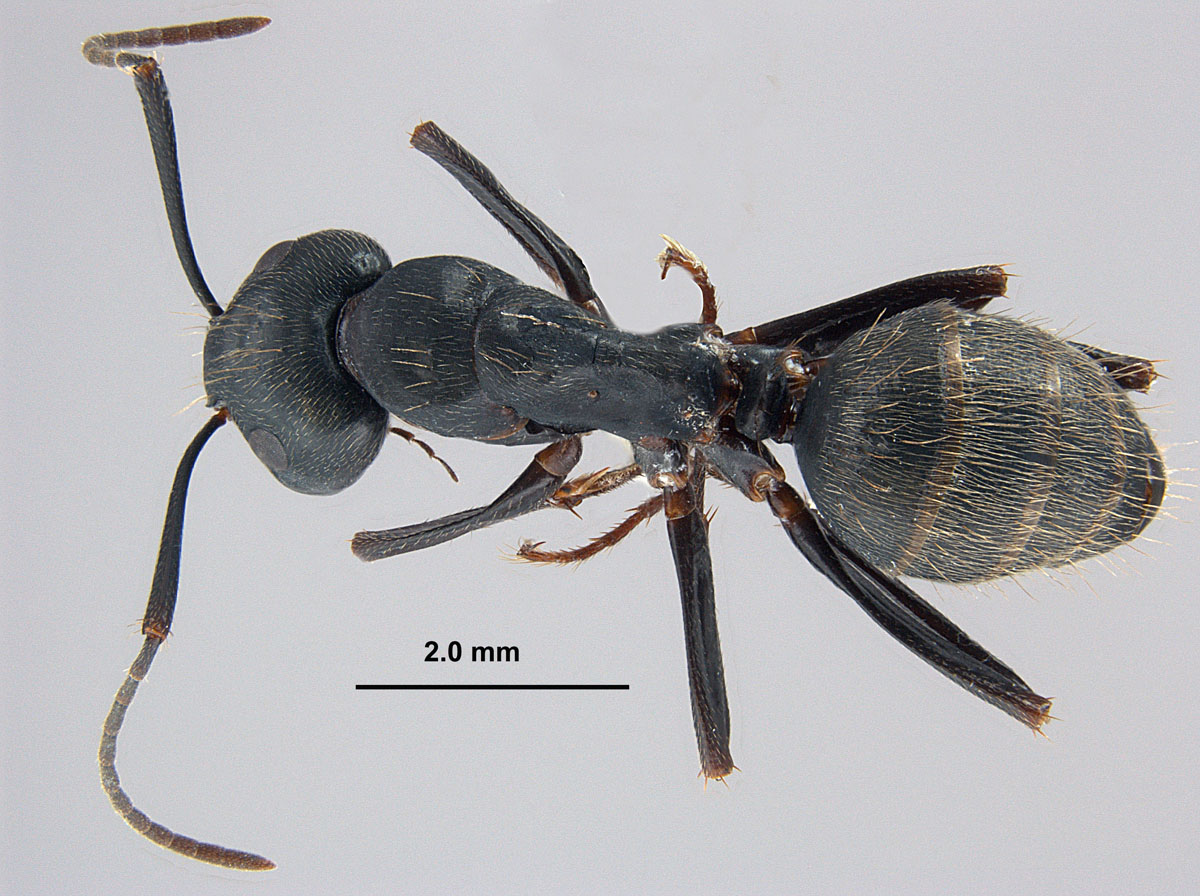 Camponotus pennsylvanicus, dorsal view of minor worker (MS, DeSoto Co.) (Photo by Joe A. MacGown). |
|
|
|
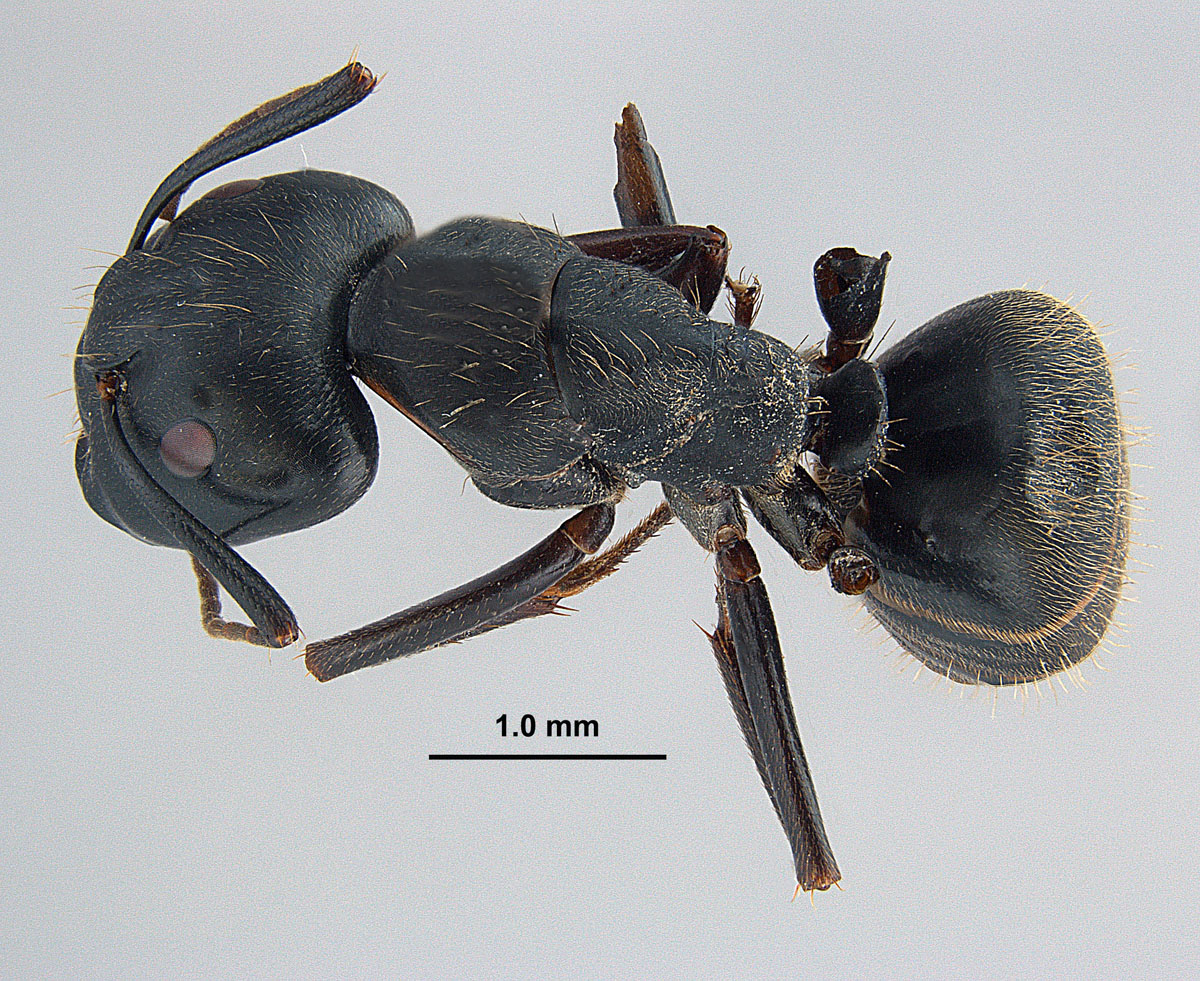
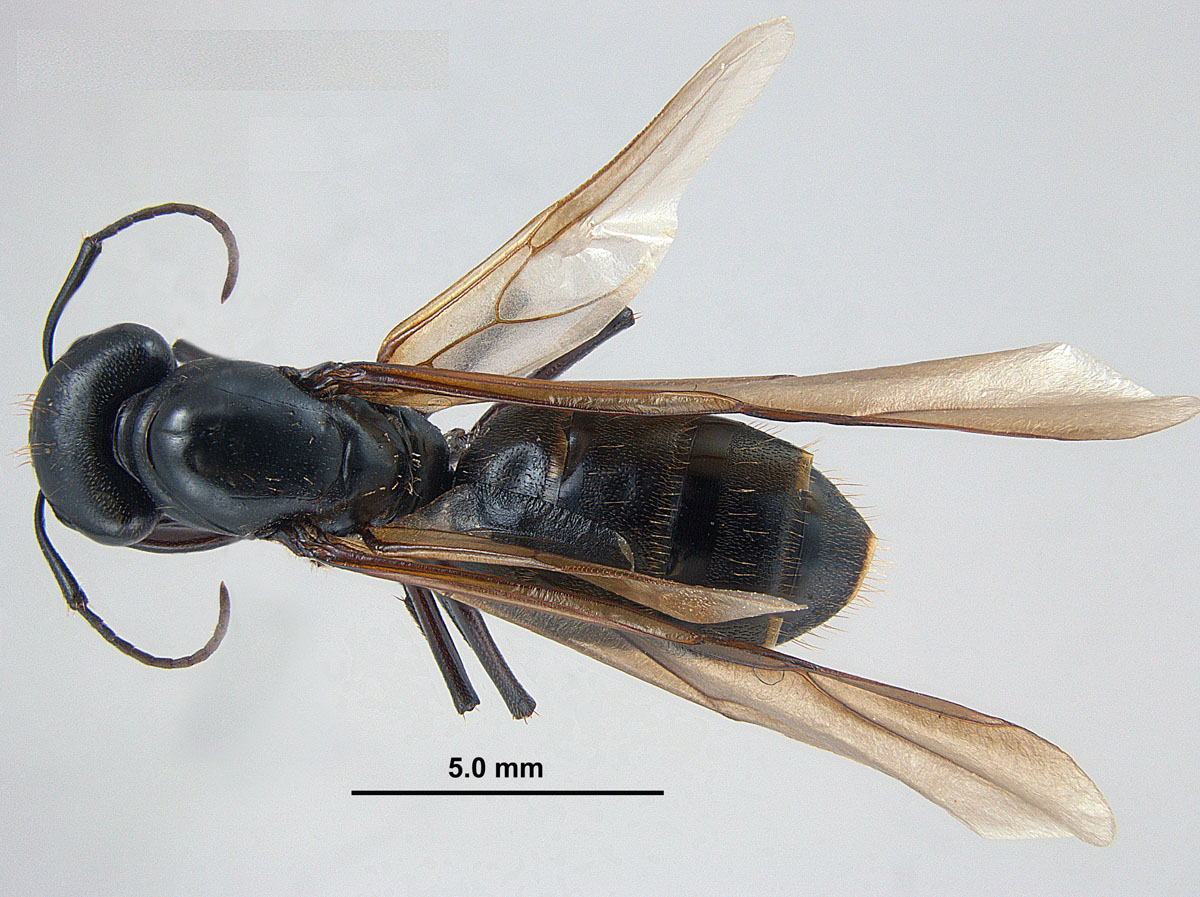 Camponotus pennsylvanicus, dorsal view of an alate queen (MS, DeSoto Co.) (Photo by Joe A. MacGown). |
|
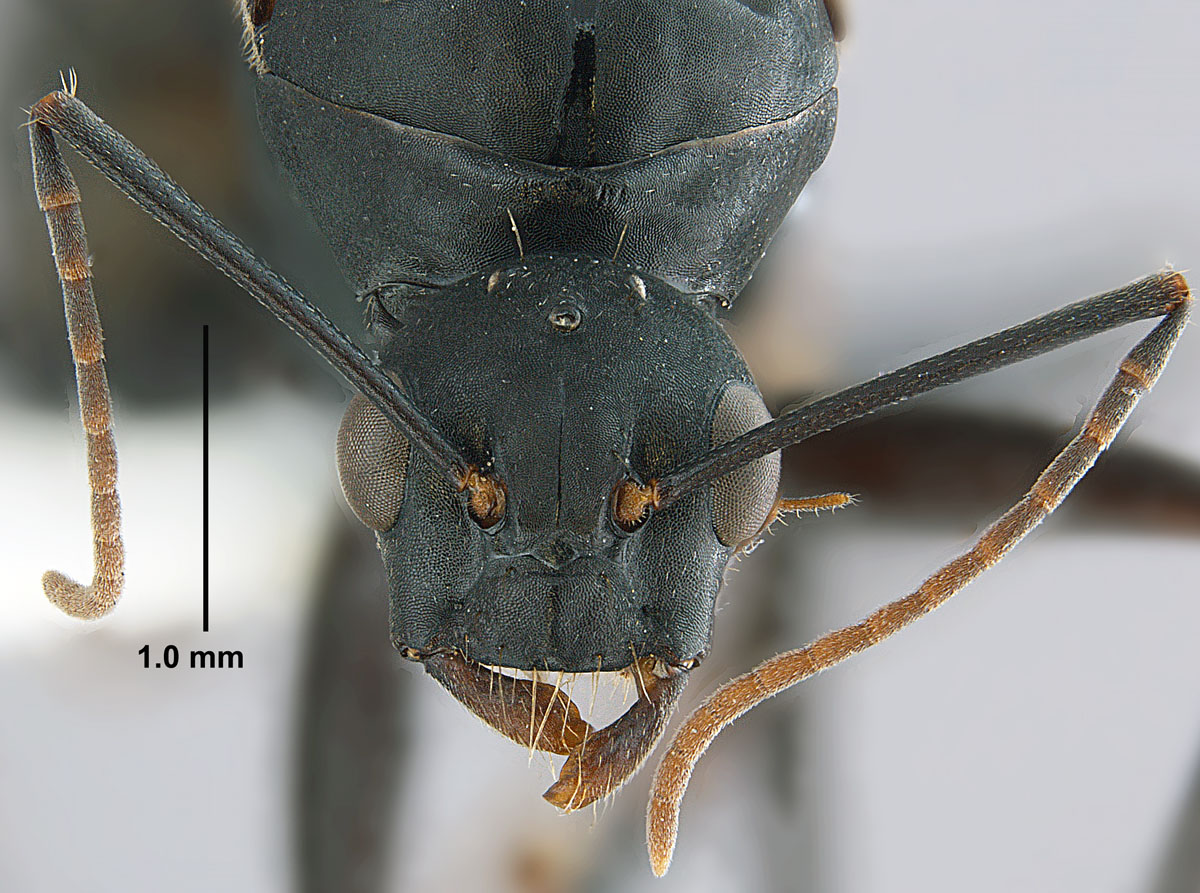 Camponotus pennsylvanicus, full face view of a male. (MS, DeSoto Co.) (Photo by Joe A. MacGown). |
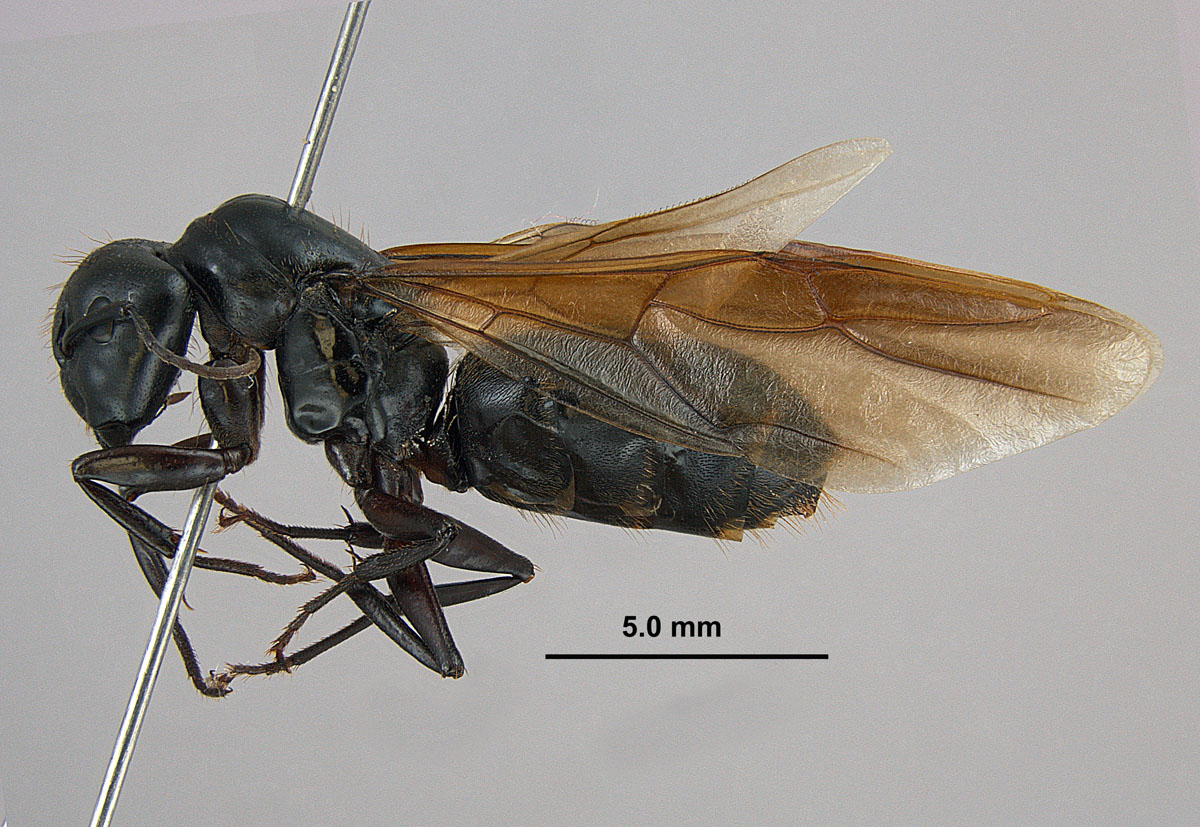
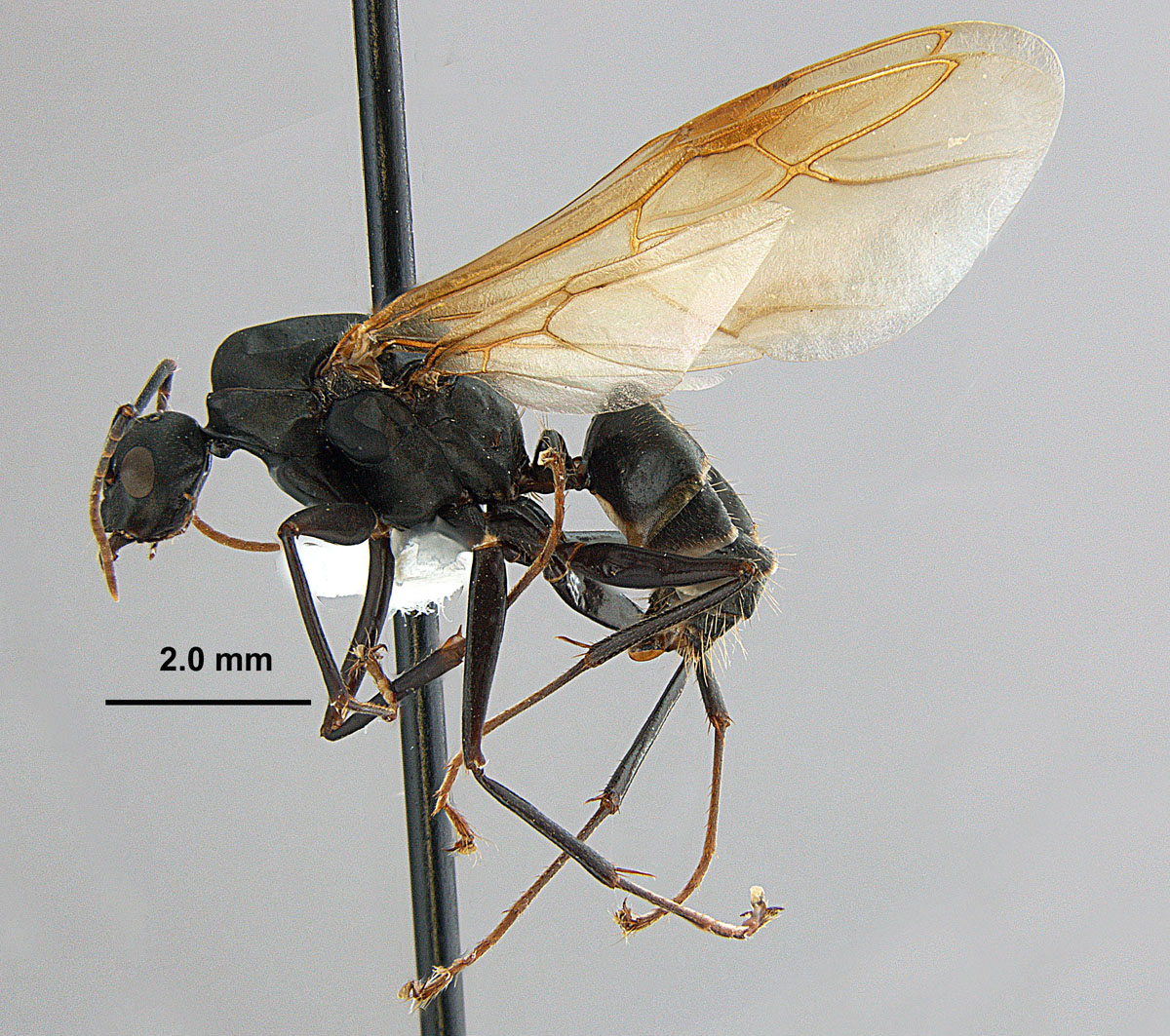 Camponotus pennsylvanicus, lateral view of a male (MS, DeSoto Co.) (Photo by Joe A. MacGown). |
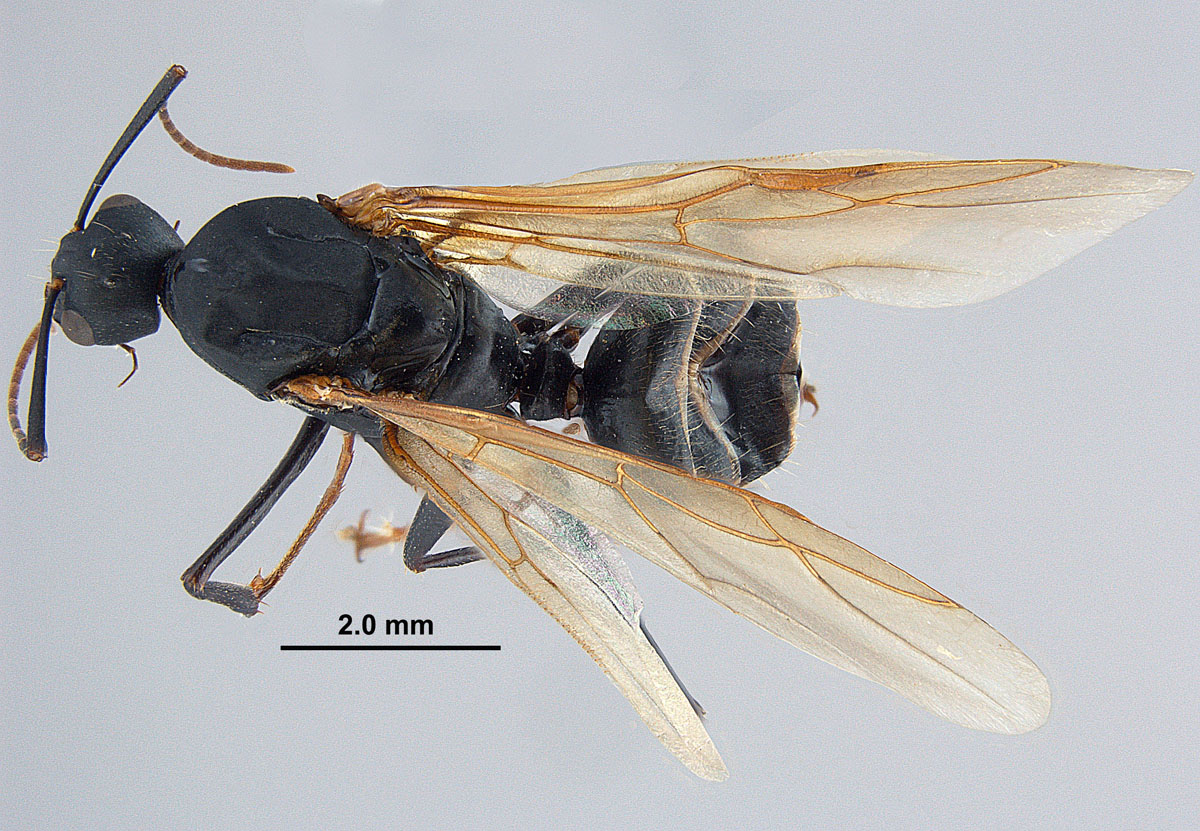 Camponotus pennsylvanicus, dorsal view of a male (MS, DeSoto Co.) (Photo by Joe A. MacGown). |
|
Introduction
Ants in the genus Camponotus are collectively known as carpenter ants because some species nest in wood, including man-made structures. This genus includes some of the largest and most common ants in the world, and they are found in all biogeographical regions (Bolton, 1995). More than 900 species of Camponotus are known worldwide, with 50 species reported from the United States (Hansen and Klotz, 2005) and 20 species found east of the Mississippi River (Deyrup, 2003; Smith, 1979).
Species in this genus are variable in size with workers ranging from 3 to 15 mm or more in length and queens (also referred to as females) of some species attaining a length of 19 mm or more. Many species are polymorphic. Workers have a 12-segmented antenna that lacks an apical club. Antennal fossae do not touch the posterior border of the clypeus. Ocelli are not present on the heads of workers. The workers of most species have an indistinct metanotal suture between the promesonotum and the propodeum, and those species that lack an obvious and deep metanotal suture have the shape of the alitrunk in a smoothly curved arc (as seen in profile).
Camponotus pennsylvanicus is in the subgenus Camponotus, which includes some of the true carpenter ants that nest in wood. Species in this subgenus are large ants with workers ranging approximately 6–14 mm in length. The clypeus is ecarinate to only scarcely carinate, antennal scapes are not flattened at the bases, clypeal fossae are well developed, and the heads of major workers are usually broader than long. This subgenus includes three species in Mississippi.
Camponotus pennsylvanicus, the black carpenter ant, holds the distinction of being the first North American ant species ever described, having been named by De Geer in 1773. It is also one of the largest and most familiar ants of eastern North America. Major workers reach approximately 9–13 mm in length, and the species is typically black to blackish throughout all castes, a useful field character but one that should be confirmed by pubescence and pilosity. Smith (1965) considered it "one of our best known and most adaptable ants," and Hansen and Klotz (2005) recognized it as the principal structural pest Camponotus in Eastern North America. It is a member of the herculeanus species complex, a closely related group containing C. herculeanus, C. modoc, and C. chromaiodes; recent molecular data confirm a particularly close relationship with C. modoc (Schär et al., 2018).
Taxonomic History
Camponotus pennsylvanicus (De Geer, 1773) valid
- Formica Pennsylvanica De Geer, 1773: 603–604, Plate 31, Figs. 9, 10 (major, minor, female, male). U.S.A. (Pennsylvania).
- Combination in Camponotus: Mayr, 1862: 666–667.
- Combination in Camponotus herculeanus (subspecies): Forel, 1879: 57; Mayr, 1886a: 420; Emery, 1893: 675; Wheeler, 1905a: 402; Wheeler, 1910a: 335–338; Buren, 1944: 293.
- Combination in Camponotus (Camponotus): Emery, 1920a: 255; Forel, 1914a: 266.
- Status as species: Ruzsky, 1896: 67–68; Forel, 1907a: 10; Creighton, 1950: 367–368; Smith, 1979: 1427; Hansen & Klotz, 2005: 86–87; Ellison et al., 2012: 124–125; Mackay, 2019: 292 (redescription).
- Senior synonym of Formica semipunctata Kirby, 1837: 262 (female, U.S.A., New York): Mayr, 1886a: 420.
- Senior synonym of Camponotus herculeanus herculeano-pennsylvanicus Forel, 1879: 57 (and its replacement name Camponotus herculeanus pennsylvanicus var. mahican Wheeler, 1910a: 299, 338): Creighton, 1950: 367.
Common Name
Black carpenter ant
Diagnosis
Camponotus pennsylvanicus is a large, mostly uniform black carpenter ant, with workers approximately 5–13 mm long in the MEM material examined. Major workers, minor workers, queens, and males are typically black to blackish throughout, although some specimens may show dark reddish-brown coloration on the propodeum, petiole, base of the gaster, or bases of the legs.
This species lacks erect setae on the genae, malar area, sides of the head, posterolateral corners of the head, and antennal scapes, except near the scape apex. In contrast, numerous erect to suberect setae are present on the dorsal surface of the mesosoma, petiole, and gaster. The tibiae lack erect or suberect setae except for two rows along the flexor surface, most evident on the distal half.
Appressed pubescence is sparse on most of the body, including the head and much of the mesosoma, but is more evident on the dorsum of the mesosoma and especially on the gaster. On the gaster, the appressed to decumbent hairs are long, pale silvery to yellowish, and abundant, often overlapping adjacent hairs and giving the black gaster a faint sheen.
Dark workers of C. pennsylvanicus may be confused with dark forms of C. chromaiodes. The two are best separated by the color and arrangement of the gastral pubescence. In C. pennsylvanicus, the appressed hairs on the gaster are usually pale silvery to yellowish and only slightly overlap the posterior margins of the gastral tergites, with usually much less than one-third of each hair extending beyond the tergal margin. In C. chromaiodes, the gastral pubescence is golden, denser, and longer, with the hairs overlapping the posterior margins of the gastral tergites by at least half their length. Camponotus chromaiodes also usually has reddish coloration on the posterior portion of the mesosoma, petiole, base of the gaster, or legs, whereas C. pennsylvanicus is typically uniformly black.
Minor worker. TL: 5.23–6.83 mm; HL: 1.40–1.80 mm; HW: 1.12–1.55 mm; SL: 1.52–1.95 mm; ML: 2.12–2.75 mm; EL: 0.32–0.40 mm (n=6, MEM specimens).
Head in full-face view longer than broad, narrower and more elongate than in the major worker; lateral margins weakly convex, converging posteriorly to a broadly rounded occipital margin. Eyes large and convex, not breaking the lateral cephalic margin. Frontal carinae short, posteriorly subparallel. Clypeus weakly carinate to ecarinate; anterior margin broadly convex to nearly straight, not strongly projecting. Mandibles triangular; masticatory margin with five teeth. Antennal scape long, not basally flattened, surpassing occipital margin when laid back; scapes lacking erect setae except near the apex.
Mesosoma moderately robust in profile; dorsal outline evenly and continuously arched from pronotum to propodeum. Metanotal groove weakly impressed to indistinct. Propodeum rounded, without a sharp angle between dorsal and declivitous faces. Petiole nodiform, higher than long, with rounded apex. Gaster oval.
Pilosity sparse on head, with erect setae absent from genae, sides of head, and posterolateral corners. Dorsum of mesosoma with scattered erect to suberect setae; petiole and gaster with numerous erect to suberect setae. Tibiae lacking conspicuous erect setae except for short bristle-like setae along the flexor surface, mostly on the distal half. Appressed pubescence sparse on head and mesosoma, but more abundant on gaster; gastral pubescence long, pale silvery to yellowish, giving the gaster a faint sheen.
Integument finely sculptured, mostly matte to weakly shining. Head and mesosoma finely punctate to punctulate; gaster finely sculptured, partly obscured by appressed pubescence.
Coloration predominantly black to blackish throughout. Mandibles, antennae, tarsi, and portions of legs dark brown to reddish brown. Gaster black, often with pale appressed pubescence forming a subtle silvery or bronzy sheen across the tergites.
Major worker. TL: 10.51–12.72 mm; HL: 2.95–3.42 mm; HW: 3.08–3.61 mm; SL: 2.42–2.72 mm; ML: 3.91–4.75 mm; EL: 0.60–0.65 mm (n=5, MEM specimens).
As in the minor worker, but much larger and more robust, and differing as follows. Head broad and subquadrate, approximately as broad as long; lateral margins weakly convex, slightly narrowed anteriorly toward the mandibular insertions; posterior margin weakly concave medially; posterolateral corners broadly rounded. Eyes proportionally smaller (moderately large), situated near or slightly anterior to head midlength. Frontal carinae lyrate, diverging anteriorly and posteriorly. Clypeus with median carina weakly developed or absent, anterior margin weakly angulate to nearly straight. Scapes surpassing the posterolateral corners of the head by about 1–2 funicular segments. Mesosoma, propodeum, petiole, and gaster as in the minor worker but more robust.
Pilosity as in the minor worker, the dorsum of the mesosoma with numerous erect setae. Sculpture as in the minor worker but stronger; the sides of the mesosoma dull and finely punctate — a useful character separating this species from C. schaefferi and C. texanus, which have smoother, glossier mesosomal sides. Coloration uniformly black to blackish as in the minor worker, some specimens with very dark reddish-brown tones on the propodeum, petiole, base of the gaster, or leg bases, and the tarsi slightly paler brown.
Queen. TL: 13.85–17.68 mm; HL: 3.12–3.58 mm; HW: 3.32–4.12 mm; SL: 2.55–2.98 mm; ML: 5.45–6.30 mm; EL: 0.70–0.80 mm (n=6, MEM specimens).
As in the major worker, but markedly larger, with the mesosoma enlarged and fully developed for flight. Head subrectangular, broader than in the workers; lateral margins nearly straight to weakly convex, weakly converging behind the eyes; posterior margin nearly straight. Eyes large and conspicuous; ocelli well developed. Mesosoma with mesoscutum and mesoscutellum prominent and convex; propodeum short, dorsal face shorter than the declivity. Petiole nodiform and narrow in profile; gaster large and oval. Wings hyaline to weakly infuscate, with brown to brownish-yellow venation and a brown pterostigma. Sculpture, pilosity, and coloration otherwise as in the major worker, the body uniformly black to blackish; gastral appressed pubescence sometimes shorter and less overlapping than in the workers, which can make queens harder to separate from related species in the herculeanus complex.
Male. TL: 7.50–8.98 mm; HL: 1.42–1.62 mm; HW: 1.30–1.32 mm; SL: 1.80–1.92 mm; ML: 3.21–3.61 mm; EL: 0.50–0.52 mm (n=5, MEM specimens).
Male smaller and more slender than queen, with body dark brown to black. Head in full-face view rounded to subglobose, much smaller than in workers and queen. Eyes very large, strongly convex, and occupying much of the lateral margin of the head; ocelli conspicuous. Mandibles reduced and narrow, much less developed than in workers and queen. Antennae long and filiform; scapes relatively short compared with the elongate flagellum.
Mesosoma compact and fully developed for flight, with mesoscutum and mesoscutellum prominent. Propodeum short and rounded. Petiole low, narrow, scale-like to nodiform; gaster elongate. Wings long, extending beyond the posterior margin of the gaster when folded, hyaline to weakly infuscate, with brown to brownish-yellow venation.
Sculpture and pilosity generally fine and sparse. Body uniformly dark brown to black, with legs sometimes slightly paler brown. Males of C. pennsylvanicus are similar to those of other members of the herculeanus complex and may not be reliably distinguishable from them on external morphology alone (Mackay 2019).
Biology and Economic Importance
Camponotus pennsylvanicus is a very common carpenter ant that nests primarily in wood, including live and dead trees, rotting logs and stumps, fences, telephone poles, buildings, and occasionally soil. Mature colonies may contain several thousand workers, and large colonies may occupy more than one nesting site (Smith 1965; Hansen and Klotz 2005; Buczkowski 2011). In Mississippi, nests have been found in rotten logs and in soil at the base of trees, including Quercus species (MacGown and Brown 2006). Single queens usually establish new colonies in cavities under bark, logs, or stumps (Smith 1965).
Workers forage both day and night, but activity often becomes more nocturnal during hot weather (Smith 1965; Hansen and Klotz 2005). They feed on living and dead insects, honeydew from aphids and other Hemiptera, fruit juices, and plant sap (Smith 1965). Alates have been collected in Alabama and Mississippi from mid-spring through fall, and reproductives may overwinter in the parental nest before dispersing (Buren 1944; Smith 1965; Mackay and Mackay 2002).
Several associated organisms have been observed with this species. The eastern ant cricket, Myrmecophilus pergandei Bruner, has been found in several colonies of C. pennsylvanicus, and giant bark aphids, Longistigma caryae (Harris), have also been observed in association with black carpenter ant colonies. This species is also known to harbor the bacterial endosymbiont Candidatus Blochmannia, an intracellular symbiont associated with carpenter ants and involved in nutritional functions for the host (Sauer et al. 2000; Degnan et al. 2004; Wernegreen 2015).
Because C. pennsylvanicus commonly nests in wood products and human-made structures, it is an important structural pest (Smith 1965; Hansen and Klotz 2005). Workers do not eat wood, but they excavate galleries for nesting, especially in wood softened by moisture or decay, and established colonies can cause significant damage.
Pest Status
Camponotus pennsylvanicus is one of the most important structural pest ants in eastern North America. Hansen and Klotz (2005) regarded it as the principal pest species of Camponotus in this region, and it has also been reported among the common house-infesting ants in parts of the United States (Walker 2013; Santos 2016). This species nests in wood and has been recorded from fences, poles, buildings, and the beams of frame houses (Wheeler 1905a; Buren 1944).
As with other carpenter ants, C. pennsylvanicus does not eat wood, but excavates galleries for nesting. Colonies are most often associated with moist, decayed, or otherwise weakened wood, and established nests may contribute to structural damage. Workers may also forage inside homes and can contaminate or damage food, especially when colonies or satellite nests are introduced with firewood (Smith 1965).
Control can be difficult because the main nest may be some distance from the structure, and workers seen indoors may be foragers from an outdoor colony (Ellison et al. 2012). Effective management depends on locating the nest, removing or treating infested wood when necessary, and correcting moisture problems that favor wood decay. Workers do not sting, but they can bite when handled and may eject formic acid defensively.
Distribution
Camponotus pennsylvanicus is a widespread species in the eastern and midwestern United States, ranging from New England south to Florida and west to North Dakota and Texas (Smith 1979). It is one of the most broadly distributed carpenter ants in North America and is especially common in the eastern half of the United States.
In Canada, it has been recorded from Alberta, Manitoba, Ontario, Quebec, New Brunswick, Nova Scotia, Newfoundland, and central Canada (Sanders 1972; Thompson and McLachlan 2007; Ellison et al. 2012). In the United States, published records extend across much of the continental region, including the Pacific Coast, Rocky Mountain states, Great Plains, Midwest, Northeast, and Southeast. The species is well established in Mississippi and neighboring states, including Alabama, Louisiana, Tennessee, Arkansas, and Florida (MacGown and Brown 2006; Mackay and Mackay 2002; Mackay 2019).
Literature Cited
Bolton, B. 1995. A new general catalogue of the ants of the world. Cambridge, Massachusetts: Harvard University Press, 504 pp.
Buczkowski, G. 2011. Suburban sprawl: environmental features affect colony social and spatial structure in the black carpenter ant, Camponotus pennsylvanicus. Ecological Entomology 36:62–71.
Buren, W. F. 1944. A list of Iowa ants. Iowa State College Journal of Science 18:277–312.
Creighton, W. S. 1950. The ants of North America. Bulletin of the Museum of Comparative Zoology 104:1–585.
De Geer, C. 1773. Mémoires pour servir à l'histoire des insectes. Tome troisième. Stockholm: P. Hesselberg, 696 pp.
Degnan, P. H.; Lazarus, A. B.; Brock, C. D.; Wernegreen, J. J. 2004. Host-symbiont stability and fast evolutionary rates in an ant-bacterium association: cospeciation of Camponotus species and their endosymbionts, Candidatus Blochmannia. Systematic Biology 53:95–110.
Deyrup, M. 2003. An updated list of Florida ants (Hymenoptera: Formicidae). Florida Entomologist 86:43–48.
Ellison, A. M.; Gotelli, N. J.; Farnsworth, E. J.; Alpert, G. D. 2012. A field guide to the ants of New England. New Haven: Yale University Press, xv + 398 pp.
Emery, C. 1893. Beiträge zur Kenntnis der nordamerikanischen Ameisenfauna. Zoologische Jahrbücher. Abteilung für Systematik, Geographie und Biologie der Tiere 7:633–682.
Emery, C. 1920a. Le genre Camponotus Mayr. Nouvel essai de la subdivision en sous-genres. Revue Zoologique Africaine (Brussels) 8:229–260.
Forel, A. 1879. Études myrmécologiques en 1879. Bulletin de la Société Vaudoise des Sciences Naturelles 16:53–128.
Forel, A. 1907a. Formicides du Musée National Hongrois. Annales Historico-Naturales Musei Nationalis Hungarici 5:1–42.
Forel, A. 1914a. Le genre Camponotus Mayr et les genres voisins. Revue Suisse de Zoologie 22:257–276.
Hansen, L. D.; Klotz, J. H. 2005. Carpenter ants of the United States and Canada. Ithaca, New York: Cornell University Press, xiii + 204 pp.
Kirby, W. 1837. Part the fourth and last. The insects. In: Fauna Boreali-Americana; or the zoology of the northern parts of British America, by John Richardson. Norwich, England: J. Fletcher, xxxix + 325 pp.
MacGown, J. A.; Brown, R. L. 2006. Survey of ants (Hymenoptera: Formicidae) of the Tombigbee National Forest in Mississippi. Journal of the Kansas Entomological Society 79:325–340.
Mackay, W. P. 2019. New World carpenter ants of the hyperdiverse genus Camponotus. Volume 1: Introduction, keys to the subgenera and species complexes, and the subgenus Camponotus. Mauritius: LAP LAMBERT Academic Publishing, 412 pp.
Mackay, W. P.; Mackay, E. E. 2002. The ants of New Mexico (Hymenoptera: Formicidae). Lewiston, New York: Edwin Mellen Press, 400 pp.
Mayr, G. 1862. Myrmecologische Studien. Verhandlungen der Kaiserlich-Königlichen Zoologisch-Botanischen Gesellschaft in Wien 12:649–776.
Mayr, G. 1886a. Die Formiciden der Vereinigten Staaten von Nordamerika. Verhandlungen der Kaiserlich-Königlichen Zoologisch-Botanischen Gesellschaft in Wien 36:419–464.
Ruzsky, M. 1896. Verzeichniss der Ameisen des östlichen Russlands und des Uralgebirges. Berliner Entomologische Zeitschrift 41:67–74.
Sanders, C. J. 1972. Seasonal and daily activity patterns of carpenter ants (Camponotus spp.) in northwestern Ontario. The Canadian Entomologist 104:1681–1687.
Santos, M. N. 2016. Research on urban ants: approaches and gaps. Insectes Sociaux 63:359–371.
Sauer, C.; Stackebrandt, E.; Gadau, J.; Hölldobler, B.; Gross, R. 2000. Systematic relationships and cospeciation of bacterial endosymbionts and their carpenter ant host species: proposal of the new taxon Candidatus Blochmannia gen. nov. International Journal of Systematic and Evolutionary Microbiology 50:1877–1886.
Schär, S.; Talavera, G.; Espadaler, X.; Rana, J. D.; Andersen Andersen, A.; Cover, S. P.; Vila, R. 2018. Do Holarctic ant species exist? Trans-Beringian dispersal and homoplasy in the Formicidae. Journal of Biogeography 45:1917–1928.
Smith, D. R. 1979. Superfamily Formicoidea. Pp. 1323–1467 in: Krombein, K. V.; Hurd, P. D.; Smith, D. R.; Burks, B. D. (eds.) Catalog of Hymenoptera in America north of Mexico. Volume 2. Washington, D.C.: Smithsonian Institution Press.
Smith, M. R. 1965. House-infesting ants of the eastern United States. Their recognition, biology, and economic importance. U.S. Department of Agriculture Technical Bulletin 1326:1–105.
Thompson, B.; McLachlan, S. 2007. The effects of urbanization on ant communities and myrmecochory in Manitoba, Canada. Urban Ecosystems 10:43–52.
Walker, J. M. 2013. Ants (Hymenoptera: Formicidae) of Illinois. Great Lakes Entomologist 46:1–28.
Wernegreen, J. J. 2015. Endosymbiont evolution: predictions from theory and surprises from genomes. Annals of the New York Academy of Sciences 1360:16–35.
Wheeler, W. M. 1905a. An annotated list of the ants of New Jersey. Bulletin of the American Museum of Natural History 21:371–403. Wheeler, W. M. 1910a. Ants: their structure, development and behavior. New York: Columbia University Press, xxv + 663 pp.
