
Subfamily MYRMICINAE rimose fungus ant Author: Joe A. MacGown |
||
 |
 |
 |
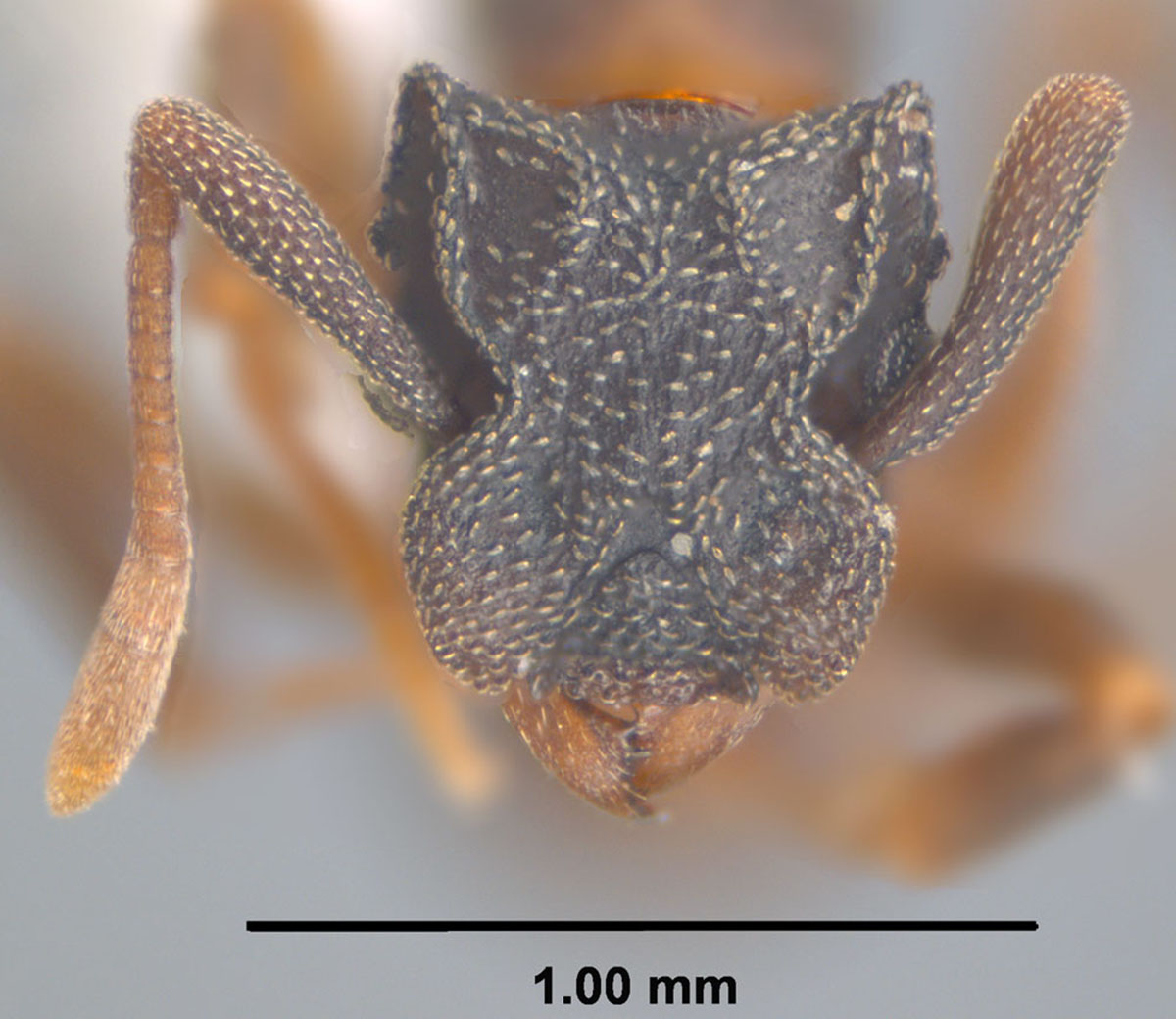
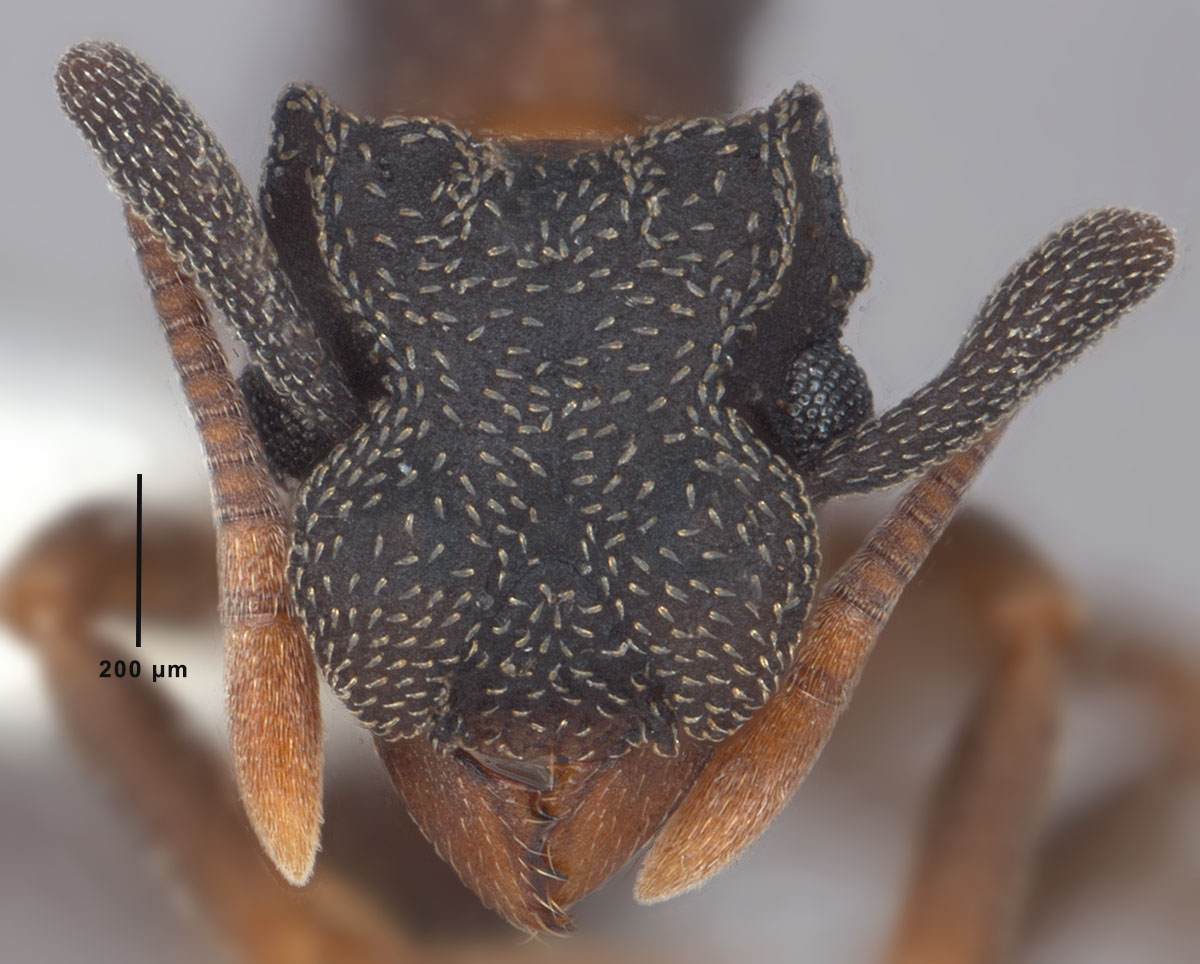
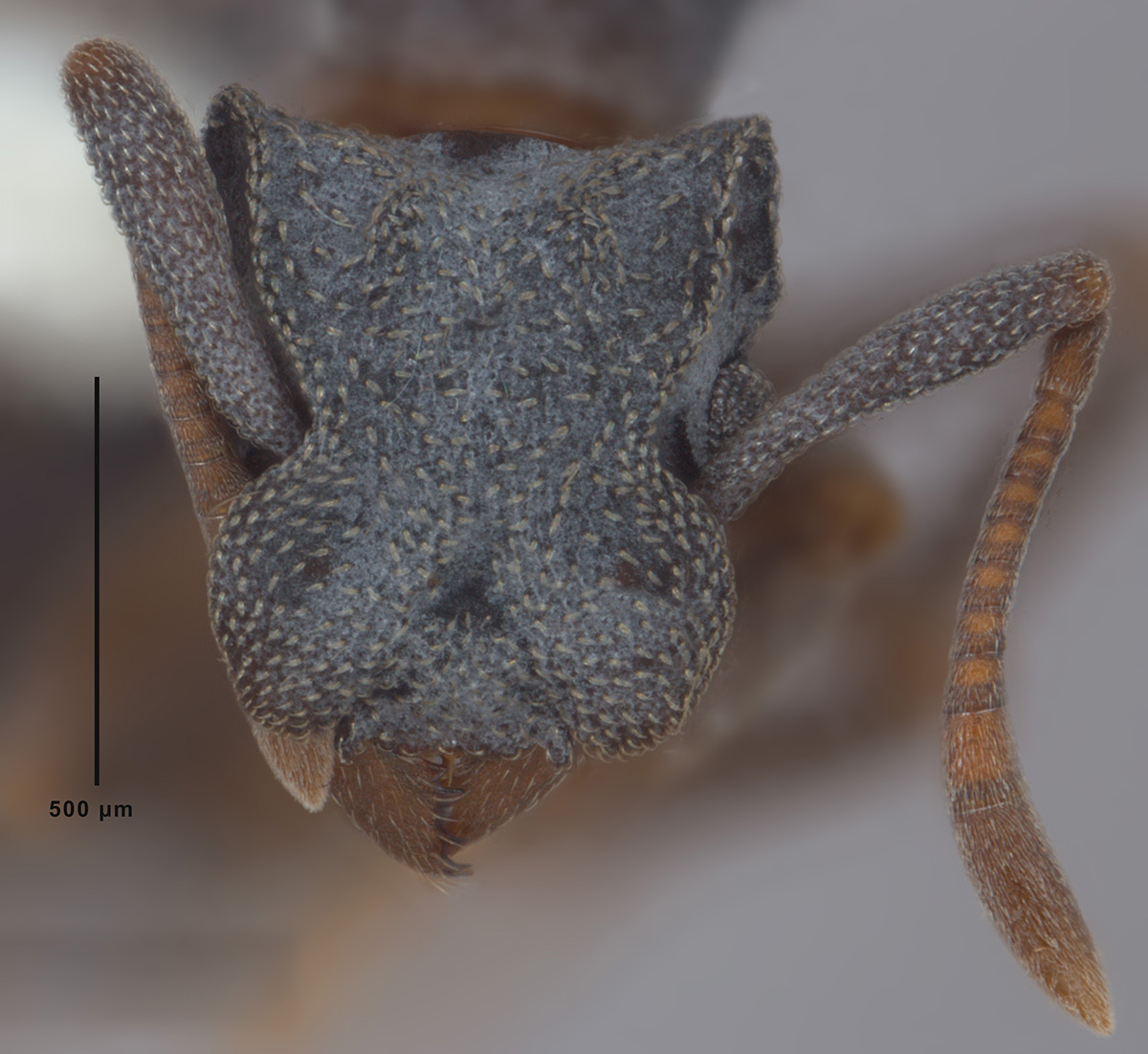
Cyphomyrmex rimosus, full face view of the head of a worker (MS, Harrison Co.) (photo by Joe A. MacGown) |
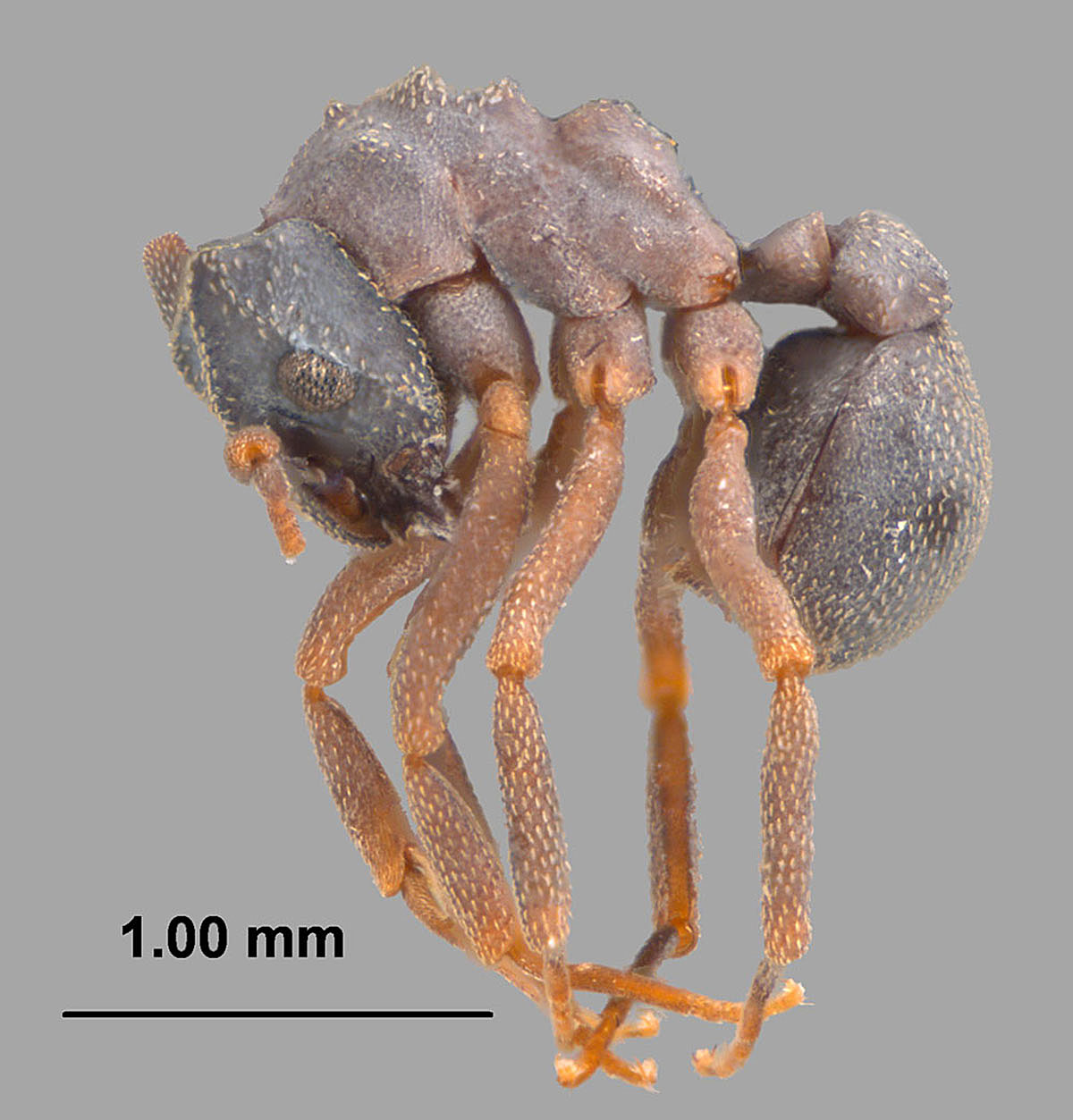
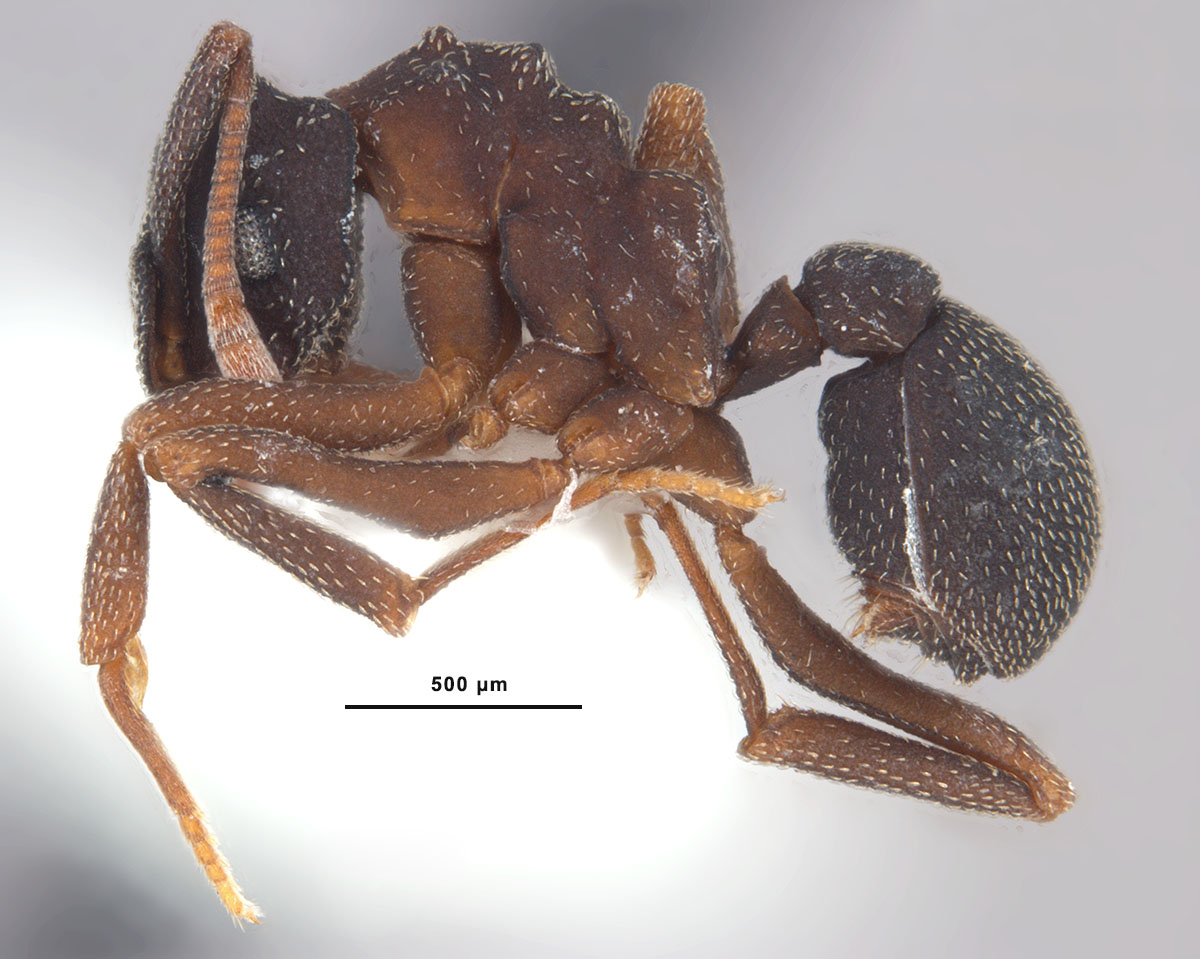
Cyphomyrmex rimosus, lateral view of a worker (MS, Harrison Co.) (photo by Joe A. MacGown) |
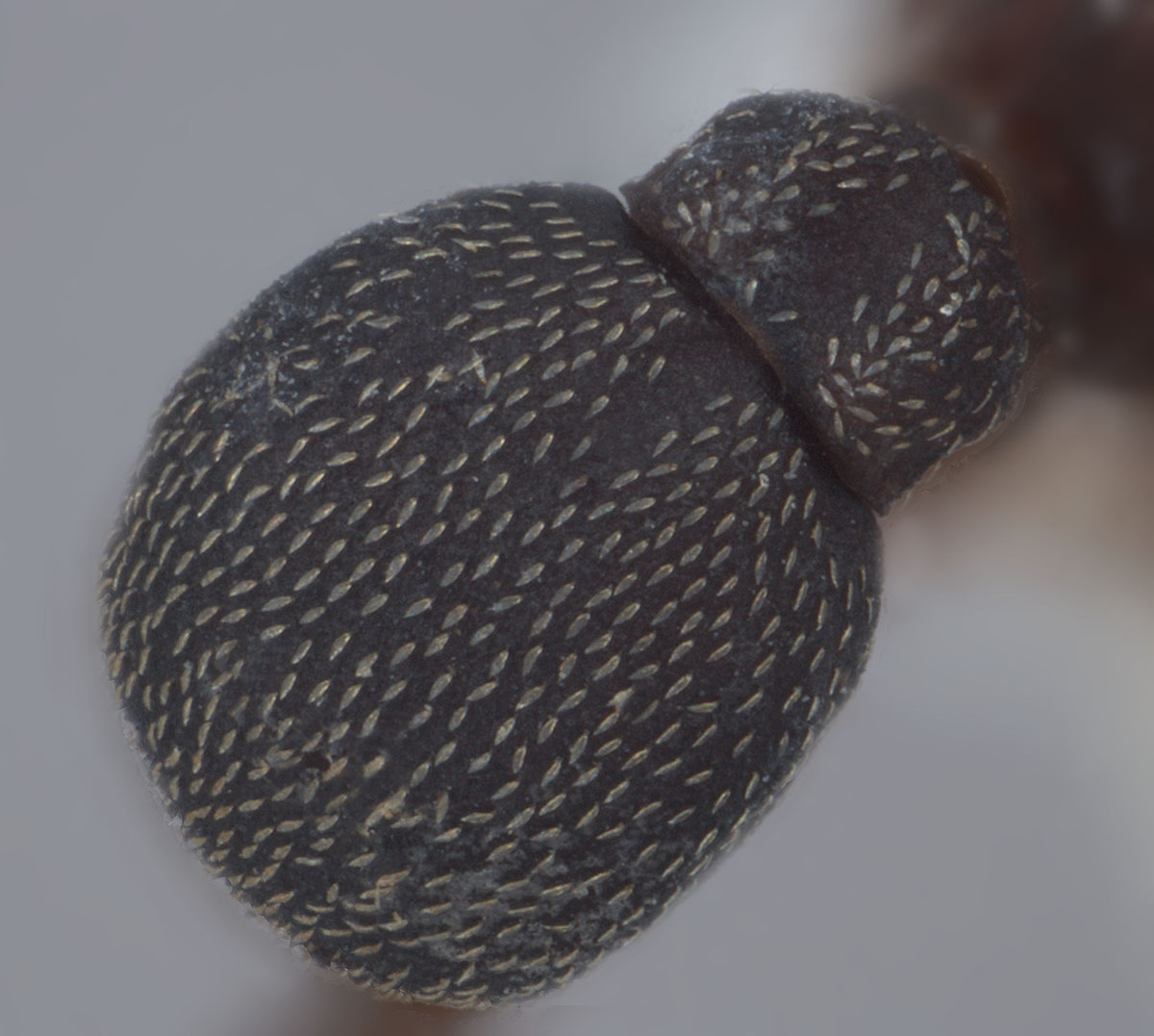
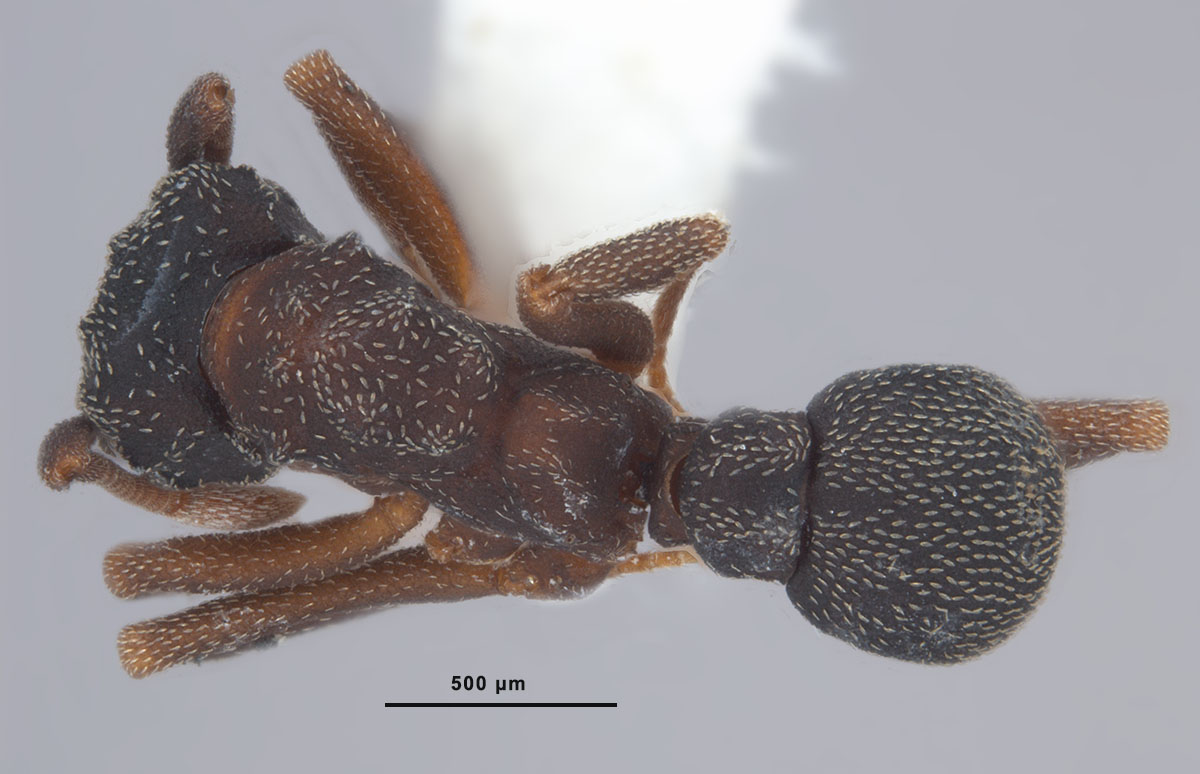
Cyphomyrmex rimosus, dorsal view of gaster of a worker (MS, Harrison Co.) (photo by Joe A. MacGown) |
 |
 |
 |
Cyphomyrmex rimosus, full face view of the head of a worker (MS, Harrison Co.) (photo by Joe A. MacGown) |
Cyphomyrmex rimosus, lateral view of a worker (MS, Harrison Co.) (photo by Joe A. MacGown) |
Cyphomyrmex rimosus, dorsal view of a worker (MS, Harrison Co.) (photo by Joe A. MacGown) |
 |
 |
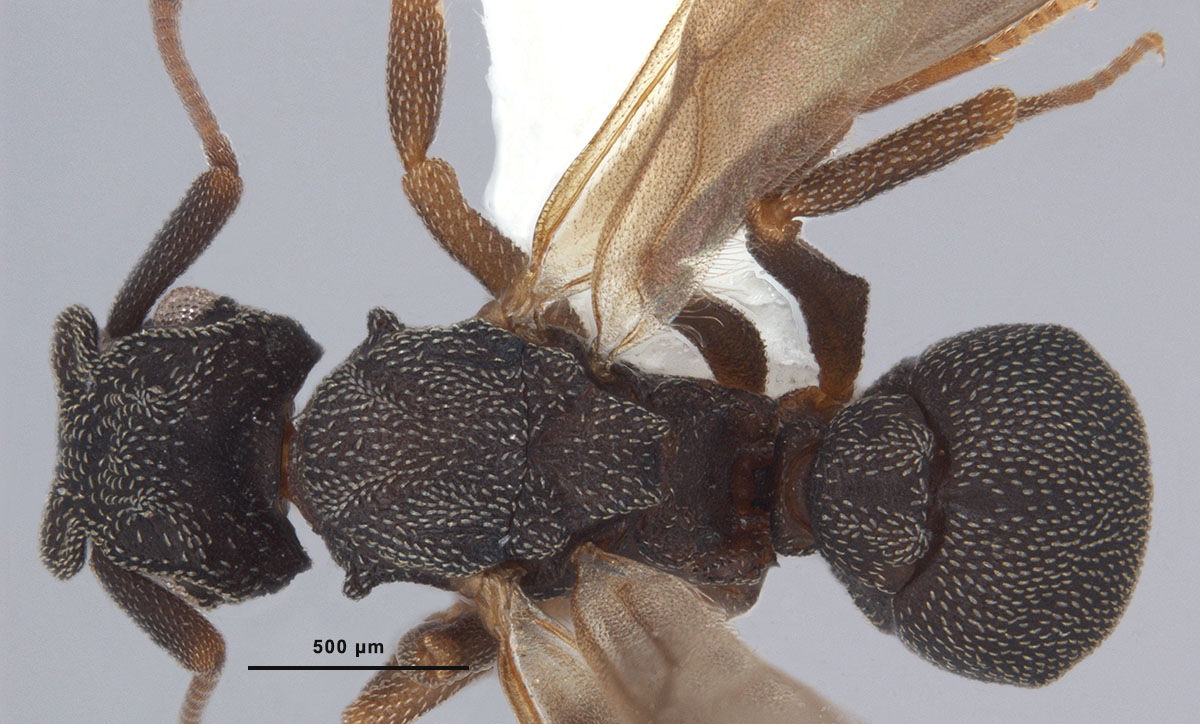 |
Cyphomyrmex rimosus, full face view of the head of a queen (MS, Pearl River Co.) (photo by Joe A. MacGown) |
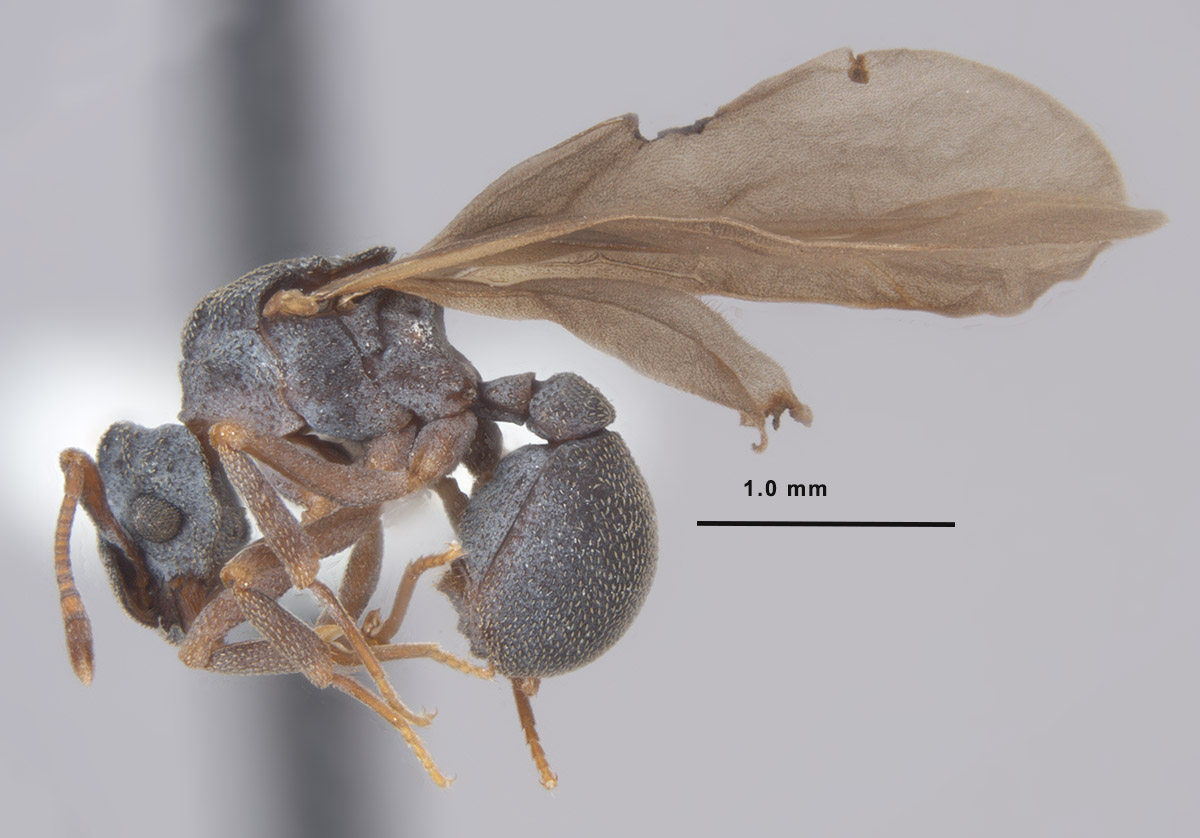
Cyphomyrmex rimosus, lateral view of the head of a queen (MS, Pearl River Co.) (photo by Joe A. MacGown) |
Cyphomyrmex rimosus, dorsal view of the head of a queen (MS, Pearl River Co.) (photo by Joe A. MacGown) |
 |
 |
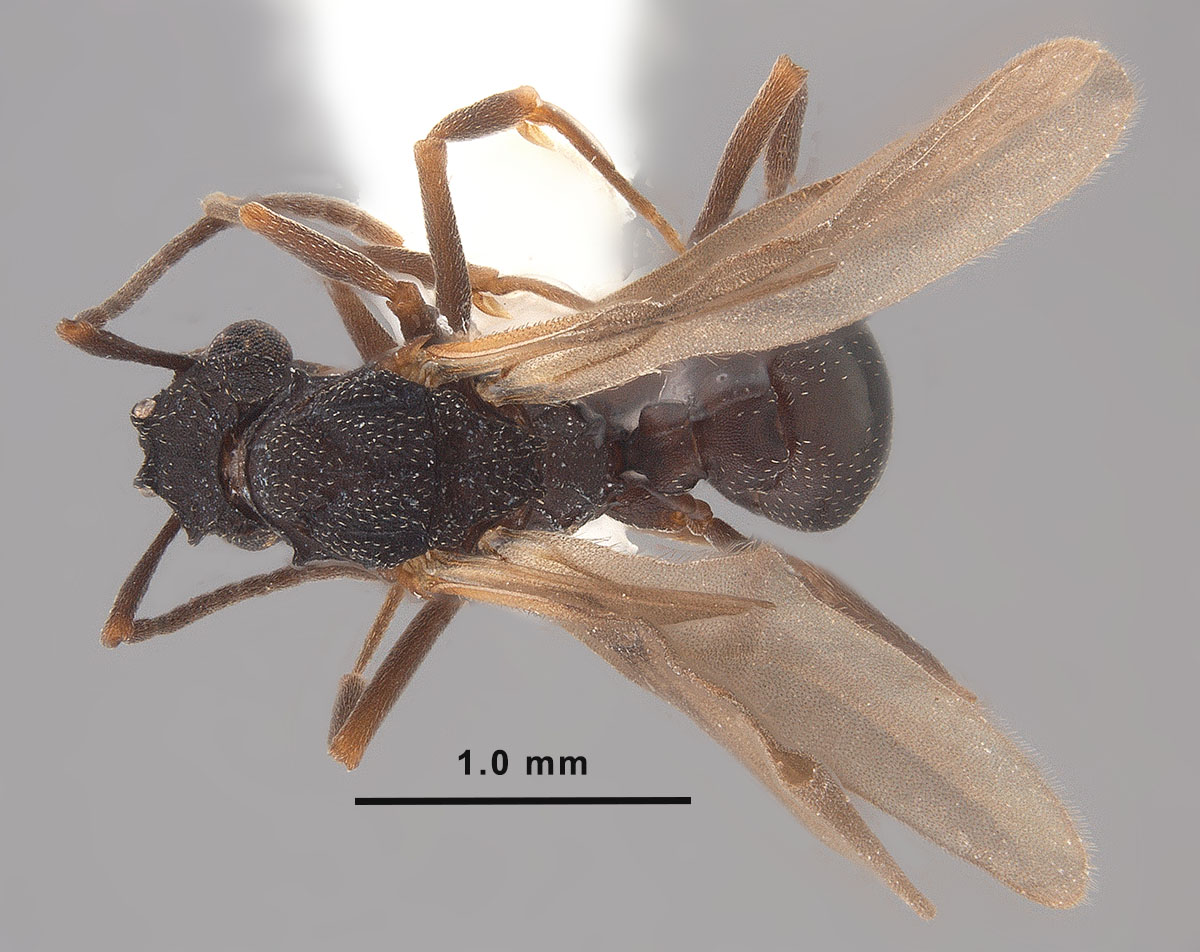 |
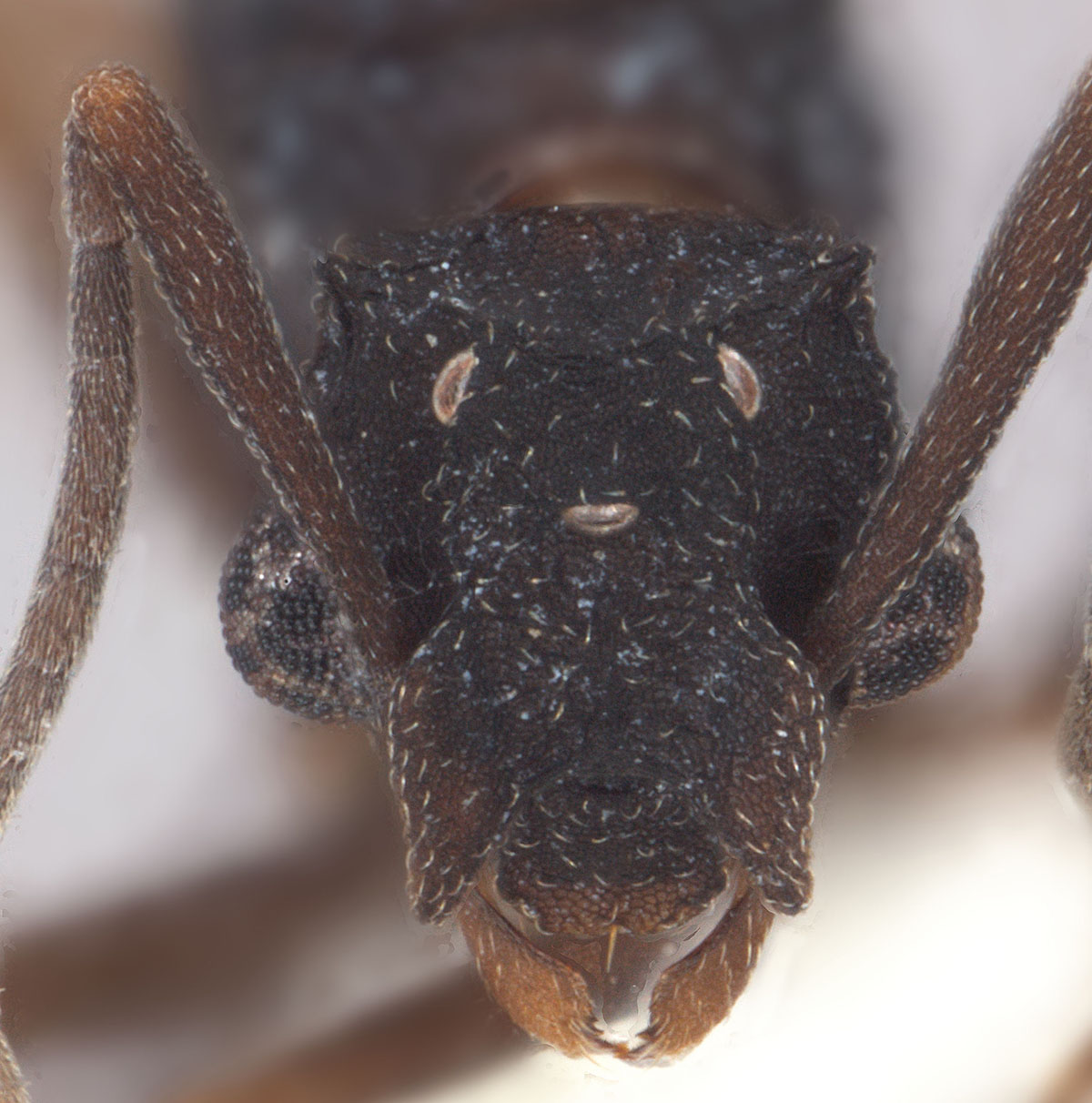
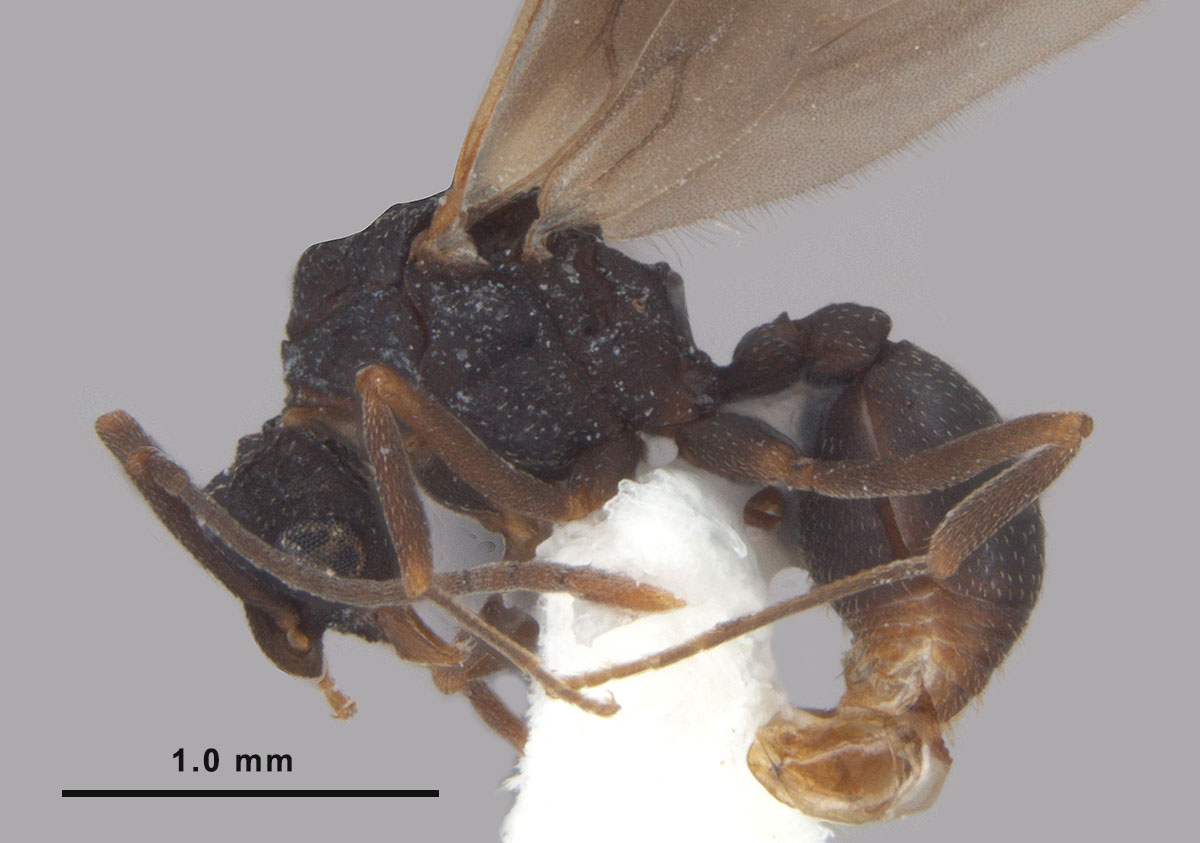
Cyphomyrmex rimosus, full face view of the head of a male (MS, Lincoln Co.) (photo by Joe A. MacGown) |
Cyphomyrmex rimosus, lateral view of the head of a male (MS, Lincoln Co.) (photo by Joe A. MacGown) |
Cyphomyrmex rimosus, dorsal view of the head of a male (MS, Lincoln Co.) (photo by Ryan Whitehouse and Joe A. MacGown) |
 |
 |
|
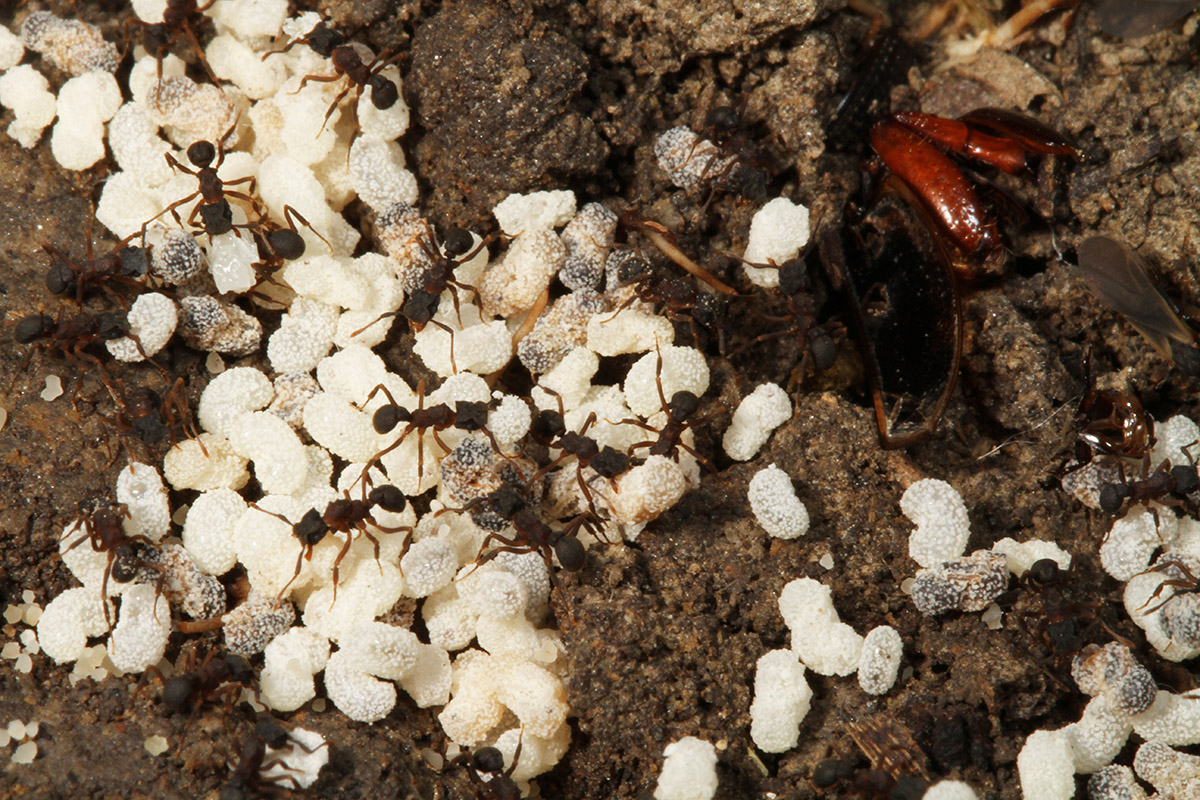
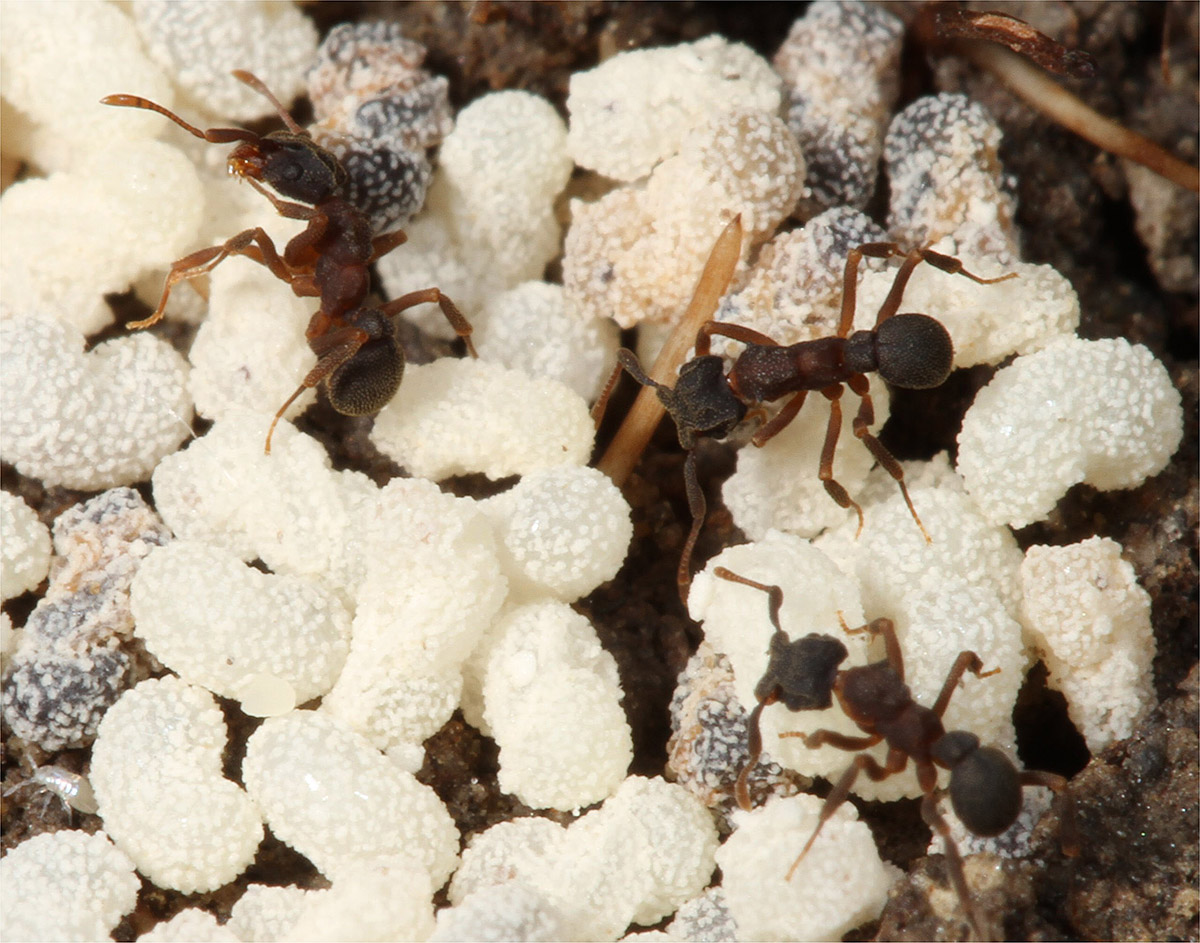
Cyphomyrmex rimosus, workers with brood (Photo by Stoy Hedges) |
Cyphomyrmex rimosus, workers with brood (Photo by Stoy Hedges) |
|
Introduction Cyphomyrmex species can be identified by their greatly enlarged frontal lobes, 11-segmented antennal with a two-segmented club, triangular mandibles with five teeth, and blunt tubercles on the dorsum of the mesosoma. Cyphomyrmex rimosus (Spinola) (Myrmicianae) is a small dull brown to blackish brown fungus-growing ant with deep antennal scrobes, enlarged frontal lobes that obscure the lateral margins of the face, no propodeal spines, an apendiculate petiole, and tubercles on the mesosoma. The species is native to the Neotropics, but has become established in the southern United States and the Galapagos Islands. C. rimosus is not considered a pest species in its native or introduced ranges. Taxonomic History (Bolton, 2013) Diagnosis Identification Queen: Small, slightly larger than workers (TL ≈ 3.8-4.0mm, HL 0.86-0.89mm, HW 0.78-0.81mm, SL 0.72-0.75mm, EL 0.22-0.23mm, MeSl 1.20-1.27mm). Head, mesosoma, waist and gaster light brown to blackish brown or dusky gray with legs and antennae usually orangish brown. Head with frontal lobes conspicuously expanded laterally, covering the antennal insertion points as well as much of the lower part of the head giving the face a notched appearance; deep antennal scrobes present, extending to posterior corners of head; entire head opaque with fine granulate sculpture, surface often dulled with a whitish cast; numerous appressed scale-like setae present on head including clypeus; eyes well developed and located laterally below the antennal scrobes; small ocelli located on three tubercles placed dorsoposteriorly; mandibles triangular in shape with five teeth; lateral portions of clypeus raised, directed anteriorly; antennae 11-segmented with a two-segmented club. Mesosoma enlarged, rounded rectangular in lateral view; distinct humeral tubercles present; metanotum notched posteriorly and overhanging propodeum; mesoscutum and mesoscutellum forming a shelf overhanging wing bases; propodeum with small rounded spines; entire mesosoma with with fine granulate sculpture, matte in appearance; with dense, short, appressed, scale-like setae present on dorsum, mostly lacking on pronotum, mesopleuron, and metapleuron; propodeum mostly lacking setae. Wings, when present, dusky grayish brown; forewing with costal, basal, subbasal, submarginal, and marginal cell; medial vein extending to wing tip; pterostigma absent; hind venation simple with only the submarginal cell closed. Waist two-segmented, opaque, with appressed scale-like setae; petiole triangular-trapezoidal; postpetiolar node enlarged, in dorsal view hemispherical, with a shallow, medial depression on the dorsal surface; posterior margin of postpetiole with wide notch. Gaster opaque, with numerous appressed, scale-like setae; distinct, medial, glabrous depression present anterodorsally that lines up with postpetiolar medial depression; first tergite enlarged making up majority of the gaster’s size; sting present. Male: Small, about the size of workers (TL ≈ 3.3-3.5mm, HL 0.66-0.70mm, HW 0.58-0.61mm, SL 0.81-0.84mm, EL 0.26-0.28mm, MeSL 1.20-1.27mm). (n=5) (MEM specimens). Color overall dark brown to brownish black, legs dark orangish brown. Head with frontal processes enlarged and distinctly projecting anteriorly; posterior edge of head flat with triangular tubercle at each posterior corner; strong carina curving between posterior corners of head and from posterior corners on sides of head to eyes; entire head with tight knit reticulation, matte, with scattered, short, appressed, setae; eyes large, distinctly convex; three ocelli present on blunt tubercles; mandibles triangular, with teeth; lateral edges of clypeus slightly raised; antennae 13-segmented; scape elongate, about as long as head length; last funicular segment elongated and more than twice the length of the preceding segment; frontal processes enlarged and distinctly projecting anteriorly; posterior edge of head flat with triangular tubercle at each posterior corner. Mesosoma with roughened, matte appearance, with hair-like setae dorsally; two humeral tubercles present; posterior edge of metanotum notched, overhanging propodeum; mesoscutum and mesoscutellum covering wing bases; propodeum with two denticle like projections. Wings grayish brown; forewing with costal, basal, subbasal, submarginal, and marginal cell; medial vein extending to wing tip; pterostigma absent; hind venation simple with only the submarginal cell closed. Waist two-segmented; both nodes matte, with fine granulate sculpture; scattered, short appressed, thickened setae present; petiole with short anterior peduncle, node smoothly arched anteriorly and slightly raised posteriorly in profile view; postpetiolar node enlarged with a shallow, medial, glabrous depression. Gaster matte, with small, hair-like setae; faint, almost imperceptible anterior medial depression aligned with the postpetiolar depression, sometimes only visible as a flat area instead of being convex like the rest of the gaster; first tergite enlarged to make up a majority of the gaster’s size; genitalia present at the apex with large parameres obvious. In the Southeast, workers of Cyphomyrmex can be easily distinguished from other genera by the unique head shape (see full face view of worker), dark coloration, short, compact size with prominent rounded tubercles on mesosomal dorsum, and the flat, appressed scale-like setae on the head and body. This species is similar to Cyphomyrmex minutus, which is apparently native to Florida and smaller in size. According to Snelling and Longino (1992), the head width of C. minutus is less than 0.56mm and the setae in the center of the first gastral tergite are closely appressed and usually separated by more than their own lengths, whereas in C. rimosus, the head width is greater than 0.62mm and the hairs on the first gastral tergite are not completely appressed and are separated by less than their own lengths. Specimens of both species were examined by Joe MacGown at the collection in Gainesville, Florida. MacGown had a hard time telling them apart, but he did not have an ocular micrometer to measure head widths with. Biology and Economic Importance The colony size of C. rimosus is typically small, with usually less than 100 workers, although colonies with over 300 workers have been observed (Murakami and Higashi 1997). Colonies are typically monogynous, but may be polygynous (Murakami and Higashi, 1997, Snelling and Longino 1992).Nests are often simple, shallow, impermanent structures under rocks, logs, dry cow manure, or any other surface. The species is very common in open habitats such as pastures and also in open woodlands such as longleaf pine forests. As with other attine ants, C. rimosus cultivates subterranean fungus gardens, growing the fungus on a substrate of vegetable matter, insect frass, and dead insects. These fungus gardens are composed of yeasts in the unicellular phase. Fungal gardens of most other attine species are in the multicellular, mycelial phase (Mehdiabadi and Schultz 2010). Cyphomyrmex rimosus supplements its diet with nectar and the sap of plants (Murakami and Higashi 1997). The queens have been reported to practice monandry and semi-claustral nest founding (Mehdiabadi & Schultz, 2010). This species in not considered to be a pest, but in areas of high abundance, they could invade homes in search of sugary food substances. Pest Status Distribution Nearctic Region: United States (antweb.org and antwiki.org). U.S. Distribution: AL, FL, GA, LA, MS, NM, SC, TX (antweb.org and MEM). Acknowledgments Literature Cited Bruch, C. 1914. Catálogo sistemático de los formícidos argentinos. Revista del Museo de La Plata 19: 211-234. Deyrup, M. 1991. Exotic ants of the Florida keys (Hymenoptera: Formicidae). In: Eshbaugh, W.H. (Ed.) Proceedings of the 4th symposium on the natural history of the Bahamas. Bahamian Field Station, San Salvador, Bahamas, pp. 15-22. Emery, C. 1893. Intorno ad alcune formiche della collezione Spinola. Bollettino dei Musei di Zoologia ed Anatomia Comparata della Reale Università di Torino 8(163): 1-3. Emery, C. 1894. Studi sulle formiche della fauna neotropica. VI-XVI. Bullettino della Società Entomologica Italiana 26: 137-241. Forel, A. 1893. Note sur les Attini. Annales de la Société Entomologique de Belgique 37: 586-607. Forel, A. 1912. Formicides néotropiques. Part II. 3me sous-famille Myrmicinae Lep. (Attini, Dacetini, Cryptocerini). Mémoires de la Société Entomologique de Belgique 19: 179-209. Mehdiabadi, N. J. and R. Schultz. 2010. Natural history and phylogeny of the fungus-farming ants (Hymenoptera: Formicidae: Myrmicinae: Attini). Myrmecol. News, 13: 37-55. Murakami, T. and S. Higashi. 1997. Social organization in two primitive attine ants, Cyphomyrmex rimosus and Myrmicocrypta ednaella, with reference to their fungus substrates and food sources. J. Ethol., 15, 17-25. Kempf, W.W. (1966 (1965)) A revision of the Neotropical fungus-growing ants of the genus Cyphomyrmex Mayr. Part II: Group of rimosus (Spinola) (Hym., Formicidae). Stud. Entomol., 8: 161-200. Smith, D. R. 1979. In Catalog of Hymenoptera in America north of Mexico. Smithsonian Institution Press, Washington D. C. Vol. 2, pp. 1323-1427. Snelling, R. R. and J. T. Longino. 1992. Revisionary notes on the fungus-growing ants of the genus Cyphomyrmex, rimosus-group (Hymenoptera: Formicidae: Attini). Pages 479-494 in Quintero, D. and A. Aiello. Insects of Panama and Mesoamerica: selected studies. Oxford University Press, Oxford. 692 pp. Spinola, M. 1851. Compte rendu des Hyménoptères inédits provenants du voyage entomologique de M. Ghiliani dans le Para en 1846. Extrait des Mémoires de l'Académie des Sciences de Turin (2)13: 3-78. Spinola, M. 1853. Compte rendu des Hyménoptères inédits provenants du voyage entomologique de M. Ghiliani dans le Para en 1846. Memorie della Reale Accademia delle Scienze di Torino (2)13: 19-94. |
||


MEM | Research Taxa | Introduction | Faunal Lists | Identification | How to Use the Keys | Glossary | Collecting Tips | Specimen Preparation MEM Publications | MEM Ant Publications | Ant Videos | Ant News | MEM Ant Blog | References | Acknowledgments | Links
Author-Joe MacGown: jmacgown@entomology.msstate.edu
The ant web site was uploaded on 6 March 2003 and was last updated on 7 February 2022
(specific pages may have different uploaded and updated dates)
Drawings and photographs by Joe MacGown (unless otherwise noted) and copyrighted by the Mississippi Entomological Museum
The development of this web site was supported in part by the National Institute of Food and Agriculture, United States Department of Agriculture, under Project No. MIS-012040 and the USDA-ARS Areawide Management of Imported Fire Ant Project (Richard L. Brown, Principal Investigator).